


Your Comprehensive Back to School Checklist
Updated July 6, 2026
Key Takeaways
- Planning ahead is the simplest way to bring down the cost of school gear. Reduce both stress and the cost of back-to-school shopping, helping you avoid last-minute purchases and make the most of seasonal savings.
- Before buying anything new, take stock of what you already own. Reusing uniforms, stationery and school essentials can significantly reduce your back-to-school budget.
- The best back to school savings come from lots of small, informed decisions. Compare prices, buy only what you need, shop second-hand where appropriate, and spread costs over the summer holidays.
There's something about the back to school period that never ceases to catch me off guard. One minute, my son and I are enjoying lazy mornings, family days out and the last few ice creams of summer. And next, I'm wondering if any of last term's school uniform still fits. Actor factoring in stationery, lunchboxes, book bags, sports kit, technology, it's no surprise that back-to-school shopping has become one of the biggest seasonal expenses for many families.
Recent research by Nationwide suggests UK parents now expect to spend around £329 per child on back to school essentials, with almost half saying costs are higher than the previous year. More than half also admit they feel under pressure to spend beyond their budget, while many are turning to second-hand shopping, supermarket own brands and reusing items from previous years to help keep costs under control.
As a mum who's always looking for practical ways to save money, I know that a little planning makes all the difference. That's why I've put together this comprehensive back-to-school checklist. I've researched everything families might need, from nursery and Reception right through to sixth form, college and university, so you can feel organised, spread the cost where possible and head into September with one less thing to worry about.
What’s in Savoo’s Guide to Back to School Essentials
- Why do I need a back to school checklist?
- What back to school items are parents spending the most money on?
- The true cost of school uniform and shoes
- Essential school stationery for every age
- Your primary and secondary school essentials checklist
- Choosing the right laptop for university
- What you'll need for student accommodation
- Do a back to school audit before you spend a penny
- 10 money-saving tips for back to school supplies
- A final word on getting ready for the new school year
- Childcare FAQs
Why do I need a back to school checklist?
Whether your child is starting Reception, moving up to secondary school, or heading off to university, a back-to-school checklist can make things feel much more manageable. When you list all your tasks and purchases in one place, it becomes easier to plan ahead and keep track of what you’ve done.
A good checklist can also help you avoid overspending on last-minute shopping. It’s easy to end up paying full price for something just because you realise you need it right before term starts. When you know what needs replacing, what you can reuse, and what can wait for the sales, you can compare prices, use discount codes, shop second-hand if it works for you, and spread out your spending instead of doing it all at once.
A checklist can also help you avoid buying things you don’t really need. Kids’ tastes change fast, and shops are good at making us think we need to buy everything new each term. But often, items from last year just need a quick clean or repair. With a checklist, you can see what you already have before spending extra money.
Plus, you can also check out Savoo’s Back to School category page, where you'll find lots of deals and offers to make your money go further.
What back to school items are parents spending the most money on?
Before we get into actual checklists, let's break down the main items that UK shoppers, mostly parents and grandparents of school children, are actually spending their money on these days. This will give an idea of some of the most popular (and perhaps least popular) products, from stationery to uniforms and more, so you have an insight into what to add to your shopping list, and what to avoid!
According to a YouGov survey, the primary categories for back-to-school shopping consisted of the following:
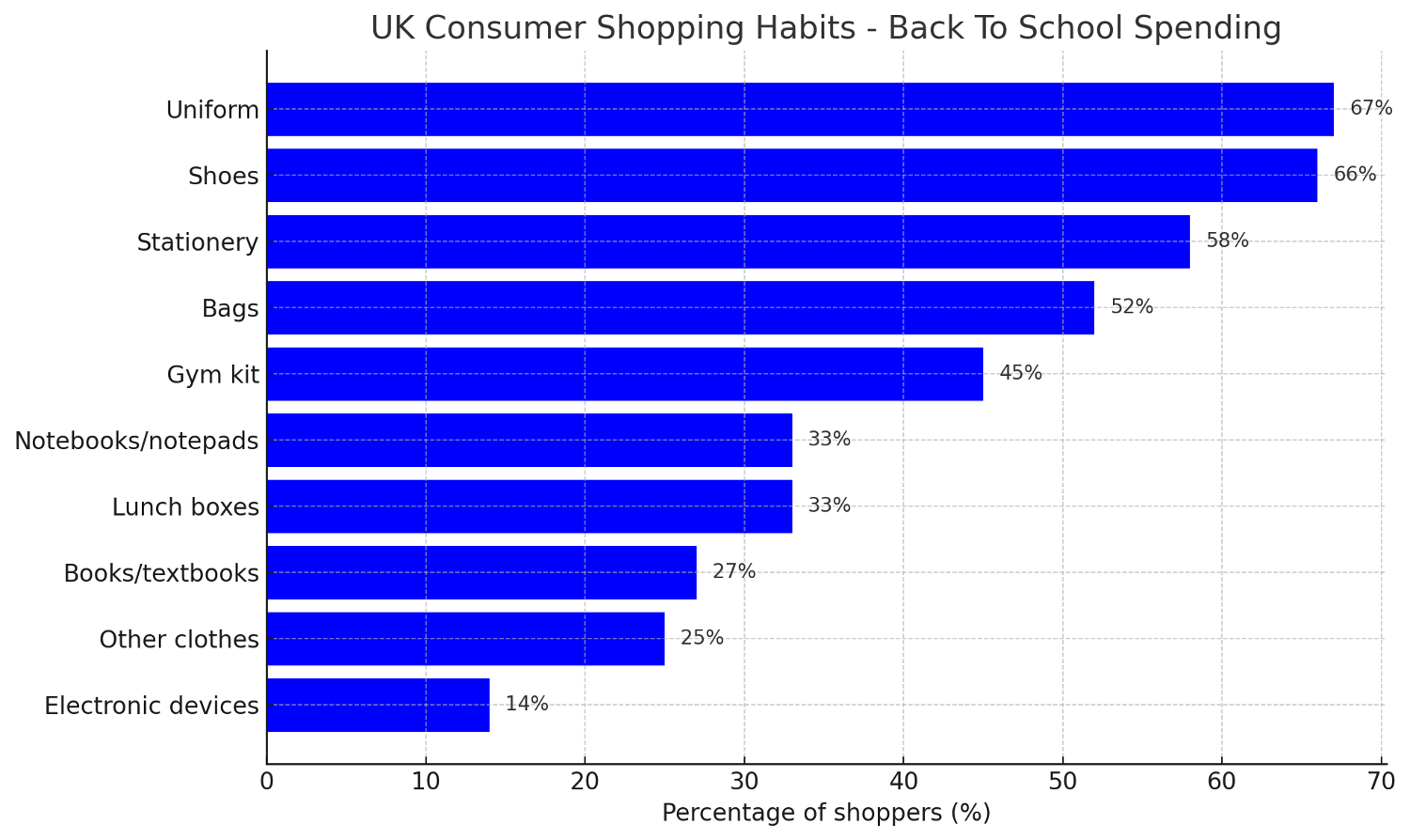
Breaking down the results reveals that school uniforms and school shoes are neck-and-neck. Kids' clothing items appear to take priority in the back-to-school shop, with 67% and 66% of parents confirming they bought these items, respectively.
In third place, stationery accounts for 58%, with lunchboxes, textbooks, and electronic devices receiving the least attention during the back-to-school shopping period. However, we can assume this is because children tend to keep/reuse their lunchboxes throughout their school years (and don't have to worry about physically growing out of them, as they do with school shoes), and most textbooks are provided by schools anyway.
Without a back to school checklist, I end up buying extra stationery, paying full price for school shoes just before the start of term, and making numerous trips to the shops because I keep forgetting things. Now, I find that a simple checklist helps me spread out the cost over the summer, take advantage of sales, and avoid buying things my son doesn't really need.

The true cost of school uniform and shoes
Revisiting those top two categories in more detail, it's no secret that school uniforms can be a huge drain on the bank balance. It’s especially true for primary school children who tend to outgrow their clothes and shoes at an incredibly fast rate.
I dug a little deeper into the statistics and found a survey by The Children's Society stating that parents with children in UK public schools spent an average of £345 per school year on school uniforms for primary school children, and £315 per year on secondary school children. The survey was conducted among 1000 parents to ensure the most accurate findings. To follow up, parents claimed these costs were up to three times what they considered a reasonable annual cost for school uniforms.
One reason school uniforms can be so expensive is that many schools require them to be branded with the school logo, often on polo shirts and blazers, which can be purchased only on school property. The same report by The Children's Society found that 66% of parents with children in secondary school reported needing to purchase two or more items from a designated supplier. Among primary school parents, 52% faced the same requirement from a particular shop. On the other hand, only 18% of secondary school parents and 24% of primary school parents were able to buy their child’s full uniform from any retailer of their choice.
An interesting article by Trutex lists all the ways you can save money on school blazers, including savvy swaps and where to make them. The article states that a school blazer can realistically cost anywhere between £25 and £70 per piece, and whilst a blazer on the cheaper side can be cost-effective in the short term, this can actually have hidden costs in the long run.
See the table below, which summarises the pros and cons of buying both expensive and low-cost school uniforms:
| Expensive School Uniforms | Cheap School Uniforms | |
|---|---|---|
| Pros | Strong, durable fabrics | Low upfront cost (£15-£20) |
| Colours stay fresh after washing | Easy to replace if lost | |
| Reinforced seams and buttons | Good for fast-growing kids | |
| Lasts longer, fewer replacements | Widely sold in supermarkets | |
| Looks smarter over time | ||
| Can be passed down to siblings | ||
| Cons | Higher cost (£30-50) | Fabrics tear and fade easily |
| Kids may outgrow quickly | Seams and buttons wear out fast | |
| Costly to replace if damaged | Loses shape and creases quickly | |
| Harder on tight budgets | May need frequent replacements |
An insightful article by Which? suggests tips and tricks on saving money on school uniforms, including recent deals and real-life saving examples you can expect at each merchant, like Morrisons, Sainsbury's, Tesco and more!
Where can I get online school uniform deals?
The good news is that there are definitely ways to save on school uniform shopping, including using a Savoo discount code on your next online order. Here are some of Savoo’s verified partners offering cheap back to school deals right now.







Essential school stationery for every age
Once the school clothing is sorted, it’s time to tackle the stationery. This is often the part of back to school shopping that catches parents out. Individually, pens, pencils and notebooks don’t seem particularly expensive, but once you start adding rulers, glue sticks, calculators, folders and all the little extras, the total can quickly add up.
The good news is you don’t need to buy everything new every September. Before you shop, take a few minutes to see what you already have at home. Pencil cases often still have working pens, rulers, and highlighters from last year. Older siblings might also have calculators, geometry sets, or folders you can reuse.
I’ve organised this stationery checklist by education stage to keep things simple. Whether you’re shopping for a child starting primary school, getting a teenager ready for secondary school, or helping a student prepare for university, you’ll find the key items they’ll need and typical price ranges to help you budget.
Every school, college, and university has its own list of required items, so it’s a good idea to check any equipment list they’ve given you before shopping. This can help you avoid buying things you don’t need.
Stationary checklist: Primary school years
- HB pencils: £2-£5
- Pencil Sharpener: £2
- Rubber: £2
- Set of Colouring Pencils: £5-£6
- Set of Colouring Pens: £4-£8
- Safety Scissors: £2
- Glue Stick: £5
- Ruler: £1-£2
- Pencil Case: £5-£10
- Protractor: £2
Stationary checklist: Secondary school years
- Black Pens: £5
- HB Pencils: £2 - £5
- Pack of Highlighters: £3-5
- Rubber: £2
- Pencil Sharpener: £2
- Ruler: £1-2
- Scientific Calculator: £15
- Geometry Set (compass, protractor and mathematical rulers): £4-£6
- A4 Refill Pad: £3-£5
- Scissors: £2-£4
- Gluestick: £2-£3
Stationary checklist: College and university Years
- Black Pens: £5
- A4 Refill Pad: £3-£5
- Pack of Highlighters: £3-£5
- HB Pencils: £2-£5
- Scissors: £2-£4
- Gluestick: £2-£3
Your primary and secondary school essentials checklist
Now that we’ve covered stationery, let’s look at the everyday things children will need during the school year.
The checklist below includes the basics for both primary and secondary school students. Each school has its own rules for uniforms and equipment, but most of these items are needed across the UK. Some schools, for example, offer swimming lessons while others do not, so not every item will apply to your child.
To help you plan your budget, I’ve added how many of each item you’ll usually need. This should help you avoid surprise expenses and make back-to-school shopping easier to manage.
- Shirts/Polo Shirts: Between 2-4 for practicality.
- Trousers/Shorts: 2 pairs of trousers for winter, 1 pair of shorts for summer.
- Skirts/Pinafore Dresses: 2 for practicality.
- Jumpers: 1 or 2, depending on whether a spare is required.
- School Shoes
- Socks: A multi-pack is preferable.
- Tights: A multi-pack is preferable.
- Blazer: Normally purchased at school.
- Tie: If required by school uniform regulations.
- School bag: Typically, either a rucksack or a book bag sold by the school.
- Lunchbox and reusable drinks bottle.
- PE Kit Bag.
- PE Kit Uniform: Usually T-shirt, shorts/skort, plimsoles.
- Swimming costume & goggles: (if required)
- Outerwear: Waterproof jacket, umbrella, hat, gloves, scarf.
- Pencil Case: Including all stationary referenced above.
- Notebook: A4 or A5 size.
- Ring Binder: To store A4 papers, such as classwork and homework.
Choosing the right laptop for university
For most students, a laptop is the main study tool. They use it almost every day for taking notes, writing essays, joining online seminars, doing research, and completing coursework. According to journalist Sarah Lumley from The Mirror, students spend about 40 hours a week on their laptops, and two-thirds say they couldn’t live without them.
The good news is that you probably don’t need the most expensive laptop. If you’re studying graphic design, architecture, or engineering, you’ll probably need a more powerful computer. For courses like humanities, business, or social sciences, a mid-range laptop with a good processor is usually enough and can save you money. Make sure your laptop has at least 8GB of RAM, or 16GB if possible, and a battery you can count on.
Before you buy, check whether your university has any minimum laptop requirements for your course, and whether you qualify for student discounts from retailers or manufacturers. UCAS offers a helpful guide on picking the right laptop for university, with plenty of tips on what to look for. Shopping during sales and using discount codes can help you save a lot, especially if you want a laptop that will last for your whole degree.
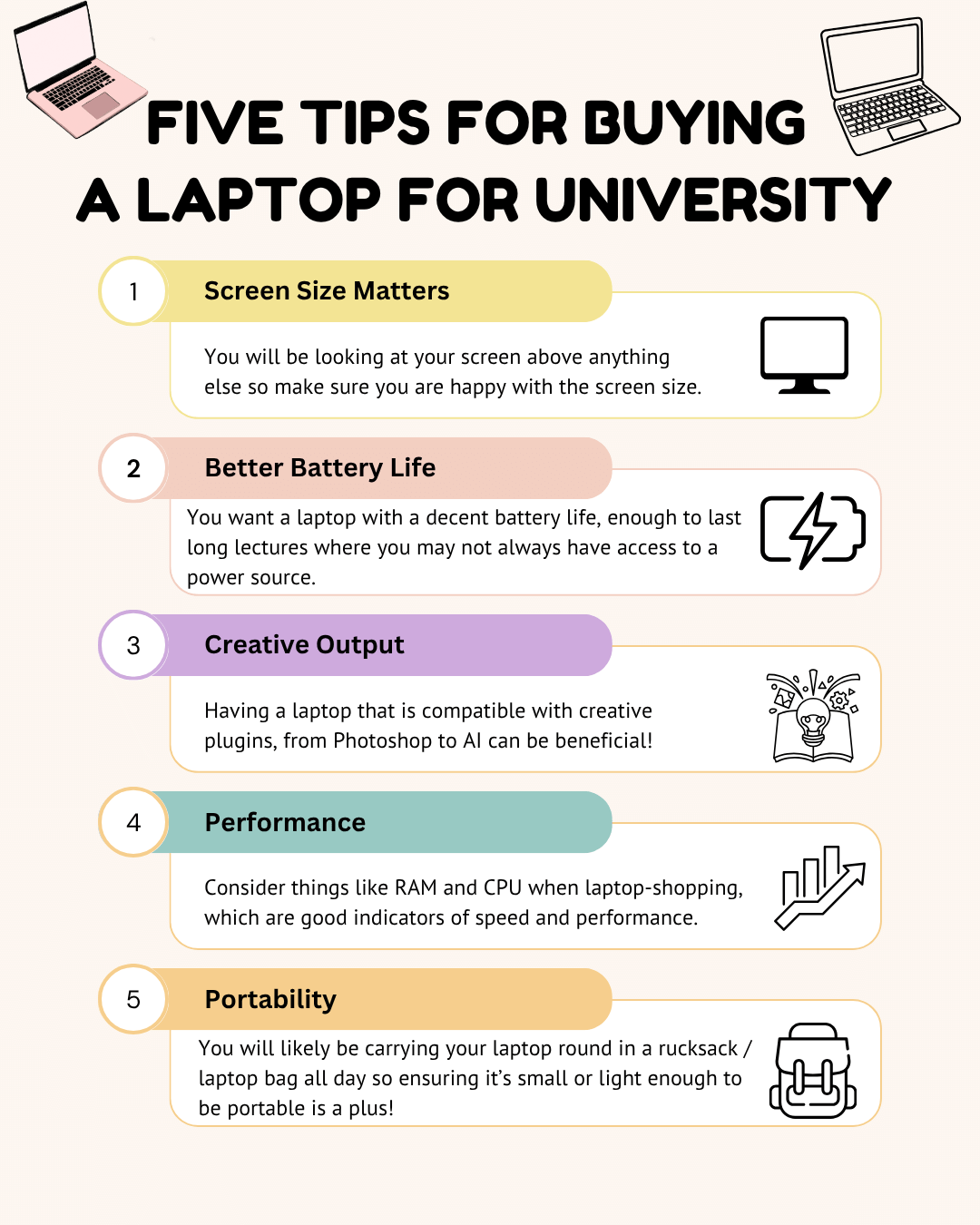
To help you make a good choice, I’ve put together five simple tips to consider before buying a laptop for university. You can also find lots of Computer and Laptop discount codes on Savoo.
What you'll need for student accommodation
Moving away to university is exciting, especially if it's your child's first time living independently. Between organising accommodation, packing belongings, and buying everyday essentials, it's easy to forget something important or end up spending more than you planned.
To make things simpler, I've divided this university checklist into three easy-to-follow sections based on the different areas of student accommodation. Whether you're shopping for a bedroom, kitchen or bathroom, you'll find everything you might need in one place, making it much easier to budget and avoid unnecessary purchases.
Before shopping for a university, check what you already have at home. Perhaps family members may have some extras to share? Watch for student discounts and special offers. Urban Outfitters also offers a useful guide to student hall essentials. Planning ahead can make moving to university less stressful and help you save money.
University checklist: Bedroom
- Duvet
- Duvet Cover
- Sheets
- Mattress Protector, Laptop, laptop charger, portable speaker, and TV, if required for the room.
- Pillows (and multiple pillow cases)
- Bedroom bin
- Bedroom decor: Photos, fairylights, candles, etc.
- Electricals: Extension lead, multi-plug
- Laundry Basket
- Hangers: Plenty needed for hanging up clothes in your wardrobe.
University checklist: Bathroom
- Shower Basics: Shampoo, Conditioner, Shower Gel, Sponge etc
- Dental Basics: Toothbrush, Toothpaste, Mouthwash.
- Hand soap
- Bathroom bin
- Bathroom caddy: Entirely optional, but may be convenient for storing cosmetics.
- Toilet Basics: Loo roll, toilet cleaner, bleach, toilet brush.
- Towels: Bath towel and hand towel.
- Washbag: For storing and transporting all toiletries.
- Bathrobe & Slippers: Convenient if sharing a bathroom with others.
University checklist: Kitchen
- Mugs and glasses
- Crockery: Including saucepans, frying pans and maybe a wok.
- Chopping Board
- Baking Trays
- Cutlery: A few sets so you don't run out while others are in the dishwasher.
- Plates & Bowls: A few sets so you don't run out while others are in the dishwasher.
- Bin Bags
- Utensils: Depending on what you like to cook, examples may include wooden spoons, spatula, cheese grater, ice cream scooper, whisk, pizza cutter, etc.
- Extras: Think bin bags, cling film, tin foil, Tupperware.
- Cleaning Supplies: Sponge, scourer, scrubbing brush, dishwasher tablets, spray bottles.
You can always add more items to your list, depending on what you like to cook and what the accommodation already has. If you can, check if your place has a shared vacuum, broom, or dustpan and brush. This helps you know exactly what to bring and what to skip. Many student halls have communal vacuum cleaners, but not all do, so it’s a good idea to ask. Other useful things include cleaning products, laundry detergent, extra cushions and blankets for your room, a desk lamp if one isn’t provided, and desk storage or stationery, like plastic wallets, document trays, and sticky notes.
If you forget anything during your back to school shopping, don’t worry, because small items can always be picked up after you arrive at university.
My colleague and fellow Money-Saving Editor, Maddy Ann Rydzik, shares her top tips on packing for university.
“I distinctly remember how stressful the packing situation was when I first started Uni. I seemed to have accumulated more stuff than humanly possible. My university shopping started in early August and occurred over multiple trips. One day was spent at Ikea getting everything I needed for the halls, and another was spent shopping for towels, toiletries, etc. I would definitely recommend starting to collate things as early as you can, as you will always discover more things you need or may have accidentally forgotten to consider. Also, don't underestimate the power of the blue Ikea carrier bags, which is basically how I transported everything to halls in the first place!

Do a back to school audit before you spend a penny
Every year, before I buy a single thing, I do what I call a back-to-school audit. It takes about half an hour, but it's probably the biggest money-saving habit I've picked up as a mum.
We empty wardrobes, try on uniforms, check shoes still fit, hunt down forgotten stationery and see what's hiding in the kitchen cupboards. More often than not, we discover there's far less to buy than I first thought.
It's a simple habit, but it's stopped me buying duplicate pencil cases, replacing perfectly good lunchboxes and paying for school shoes months before they're actually needed.
If you only take one piece of advice from this guide, make it this: always shop your own home before you shop the high street.
10 money-saving tips for back to school supplies
The biggest lesson I've learned over the years is that saving money isn't about finding one incredible bargain. Staying on budget when buying back to school gear is about making dozens of small, sensible decisions. Better understand spending habits and statistics with Savoo's Parent Spending Survey.
Start with a home inventory - Before you buy anything, take a look through wardrobes, drawers, pencil cases, and cupboards. Every year, I find unused notebooks, glue sticks, and PE bags we forgot we had.
Never buy everything in one shop - It’s easy to want to get everything done in one trip, but supermarkets usually offer the best prices on stationery, specialist shops often offer better-quality uniforms, and online stores often offer special discounts.
Spread the cost over the summer - Picking up one or two things each payday is much easier on your budget than spending £300 all at once in late August. Check out our Ultimate Guide to Amazon Prime Day Deals to save money in June or early July.
Check the school's equipment list first - Some schools give out art supplies, calculators, or exercise books. Buying these ahead of time might just waste your money.
Buy bigger where it makes sense - Kids grow fast, but buying shoes or blazers that are way too big usually doesn’t save money in the end. Try to leave a bit of room to grow, but not several sizes.
Reuse before replacing - Functional items like lunchboxes, water bottles, backpacks, and pencil cases can last for years if you give them a good clean.
Consider second-hand - Many schools hold nearly-new uniform sales through the PTA. Facebook Marketplace, Vinted, and local groups are also great places to find coats, sports kit, and even things for university.
Stack your savings - Try to combine cashback, store loyalty programs, university student discounts, voucher codes, and credit card rewards whenever you can.
Label everything - This tip is really important. So many jumpers go missing in Reception every year.
Leave the "nice to have" items until term starts - Teachers usually let students know exactly what they need in the first week. Waiting can help you avoid buying things you don’t need.
A final word on getting ready for the new school year
As a mum, I understand how tempting it can be to send your child back to school with everything brand-new. But what really matters is that children remember feeling supported and ready, not whether their pencil case was the latest trend or if their lunchbox matched their backpack.
My best advice is to keep this checklist in an easy-to-find spot and use it each summer. As the years go by, you’ll find your own routine, figure out what your family really needs, and see where you can save money without giving up on quality.
Here’s to a happy, confident start to the new school year, and a few extra pounds left in your pocket.
Frequently Asked Questions
What is the back to school date?
There is no single back to school date for the whole UK. Each school sets its own term dates, so when your child returns depends on your area, your local council, and whether the school is an academy or follows council dates.
Here’s a general guide:
- England and Wales: Most students go back during the first week of September, usually on the 1st or 2nd. Some schools may start a few days before or after these dates.
- Scotland: Schools usually start earlier, with many students returning in mid to late August.
- Northern Ireland: Most schools start again in late August or early September, depending on the school.
Keep in mind that many schools have INSET (teacher training) days at the start of term, so your child’s first day back might be different from other schools nearby. For the most up-to-date details, check your school’s website or use the GOV.UK term date finder for England and Wales.
Is August too late to shop for back to school?
According to The National Retail Federation (NRF), 67% of back to school shoppers had already begun purchasing items for the upcoming school year as of early July, when schools start in September. However, my research (and my own experience!) shows that early August is often considered one of the best times to buy school supplies, as many stores roll out their biggest discounts and multi-buy offers just in time for term to start.
Are there cost limits on school uniform?
In England, schools must keep school uniform costs reasonable. Starting in the 2026/27 school year, new rules will also limit the number of branded uniform items state-funded schools can require.
The updated guidance sets out these limits:
- Primary schools can ask for up to three branded uniform items.
- Secondary schools can ask for up to four branded items, and one of these can be a tie.
- These limits also cover PE kits and school club or activity clothing.
The goal is to help parents save money by letting them buy more generic items like trousers, shirts, skirts, and jumpers from supermarkets or high-street shops instead of expensive specialist suppliers. The government thinks these changes could save some families about £50 per child.
Remember, schools can still have a uniform policy, but it should be affordable and offer good value for money.
You May Also Like

How to Get Cheap Alton Towers Tickets
by Emily Ambler | 30/7/2025
40+ Places where Kids Eat Free this summer
by Emily Ambler | 16/7/2025