


How to Save on Childcare Costs During the School Holidays
Key Takeaways
- Childcare during school holidays can be more affordable if you use several types of support. Instead of just one method of saving money, Tax-Free Childcare, the HAF Programme, flexible working, and help from family can all work together to lower your costs.
- Planning ahead is often the best way to save money on childcare. Setting a childcare budget, knowing the real cost of care, and booking providers early can help families avoid extra costs and last-minute price increases.
- Many parents pay more for childcare than they have to. Some helpful support goes unclaimed. Government schemes like Tax-Free Childcare and the HAF Programme can save eligible families hundreds of pounds each year, but many people do not use them.
School holidays may be a fun break from the classroom for kids, but for parents, they represent one of the year's biggest financial challenges. As a parent myself, I am all too familiar with the annual balancing act of covering weeks of childcare while still leaving money for a few days out, and maybe a short break. With the need for childcare outstripping availability, costs show no sign of lessening any time soon.
Research conducted for the Coram Family and Childcare's 2025 Holiday Childcare Survey found that working parents now pay an average of £1,075 per child for summer holiday childcare, with costs rising by 4% in just 12 months. A week at a holiday club now costs about £179, which is more than two and a half times the cost of similar after-school childcare during term time.
For families with more than one child, the figures can be eye-watering. It’s little wonder, then, that a Parentkind survey found that more than half of parents would support shortening the traditional six-week summer holiday, citing childcare and financial pressures as key reasons. Further outlays come from holiday clubs, summer camps, childminders, days out, and extra food costs.
The good news is that many families are spending more than they have to. Government support and money-saving tips can often save families hundreds of pounds on school holiday childcare. This guide shares the best ways to cut childcare costs during the long summer school holidays.
What’s in Savoo’s Guide to Childcare Costs
- Understanding the true cost of school holiday childcare
- Create a dedicated childcare budget
- Everything you need to know about Tax-Free Childcare
- Five steps to using your Gov Childcare Account effectively
- Understanding 30 hours free childcare
- HAF Programme: How to access free school holiday childcare and activities
- Comparing school holiday childcare options
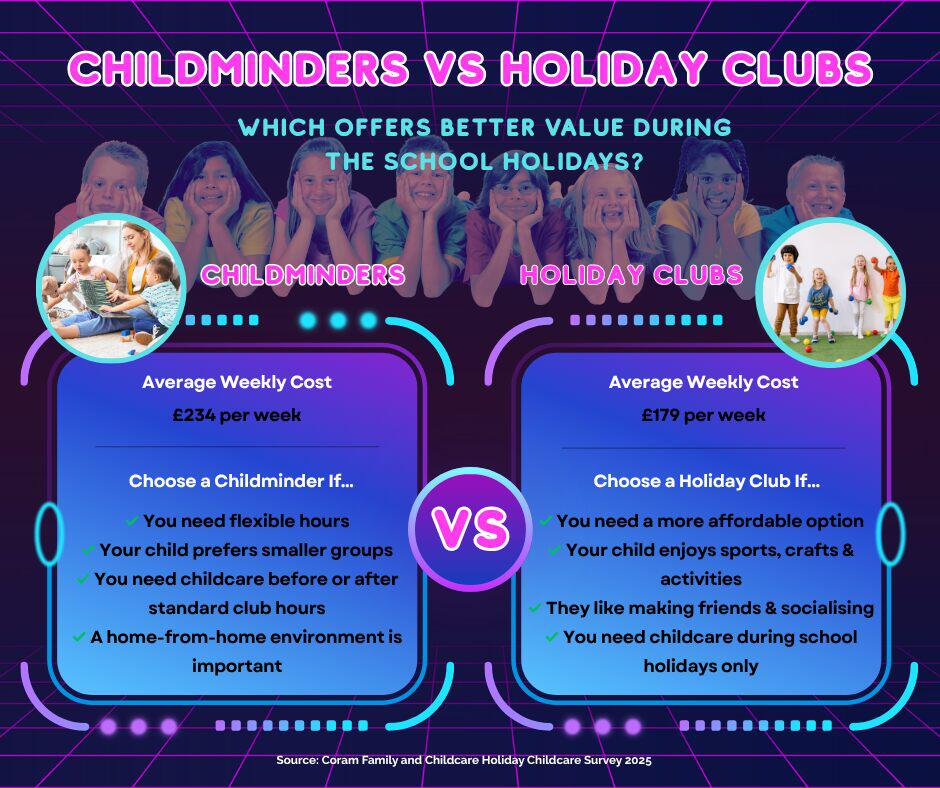
- Childminders vs holiday clubs
- Free and low-cost ways to reduce childcare costs
- Final thoughts on affordable school holiday childcare
- Childcare FAQs
Understanding the true cost of school holiday childcare
It’s easy to underestimate how much school holiday childcare actually costs because the expense rarely arrives as a single, easy-to-spot bill. Instead, the costs accumulate gradually. A few days at a holiday club. An extra hour of wraparound care. A summer camp that seemed reasonably priced until lunch, transport and activity fees were added. Before long, what looked like a manageable expense becomes one of the summer's largest household costs.
Budgeting for school holiday childcare can be tricky. The advertised price often excludes additional charges, such as overtime, meals, trips, special activities, or late pick-ups. For example, a holiday club might charge £36 per day, which seems reasonable at first. But if you add a £5 lunch fee and a £4 charge for extra hours, the daily cost goes up to £45. Over five days, that adds up to £225 for just one week.
Before making any childcare decisions, calculate the full cost rather than focusing solely on advertised prices:
- Number of holiday weeks requiring childcare
- Number of childcare days needed each week
- Daily or weekly provider fees
- Early drop-off or late collection charges
- Meals and snacks
- Activity or trip supplements
- Transport and fuel costs
- Additional spending on holiday clothing or equipment
If you take the time to figure out the real cost from the beginning, you might find ways to save money that you would otherwise miss. It also helps you set a clear budget, so you can compare options like holiday clubs, summer camps, nurseries, and childminders fairly, rather than just choosing the lowest price.
Create a dedicated childcare budget
A good way to make school holiday childcare less stressful is to stop seeing it as an unexpected cost. Summer holidays come at the same time each year, but many families only think about childcare costs a few weeks before. This can mean fewer choices and more financial stress.
Try to see school holiday childcare as a regular yearly expense, like Christmas, car insurance, or a family trip. After you work out your expected childcare costs, split the amount over 12 months and save a bit each month.
For example:
| Estimated Summer Childcare Cost | Monthly Savings Target |
|---|---|
| £600 | £50 per month |
| £1,200 | £100 per month |
| £1,800 | £150 per month |
For me, putting aside small amounts regularly is much easier than trying to save a large sum all at once. If your child goes to holiday clubs during the year, you might want to set up a separate savings pot just for childcare. You should also read our guide on Free and Cheap Summer Holiday Activities for Kids.
Many banking apps let you create separate spaces for planned expenses. Monzo's Pots, Starling Bank's Spaces and Chase's Savings Accounts can be used to ringfence money for future school holiday childcare costs. Even setting aside £20 or £25 per week can help build a useful buffer before the next school break arrives. You can even round up your purchases or set up a small weekly transfer to help build a buffer before the next school break.
It also helps to look over your childcare budget after each holiday. Did you book more days than you needed? Were there any surprise costs? Did some providers give you better value? Making small changes can make your future budgets more accurate and help you spot more ways to save.
Everything you need to know about Tax-Free Childcare
If you pay for childcare during the school holidays and have not checked if you qualify for Tax-Free Childcare, make this your top priority.
Even though this is one of the most generous childcare support schemes, many families who qualify are not using it. MoneySavingExpert says about 800,000 eligible families are missing out on a childcare discount, which means thousands of pounds in support could go unclaimed.
Tax-Free Childcare is a government program that helps working parents pay for approved childcare. Instead of getting money directly, parents set up an online childcare account and use it to pay registered childcare providers.
For every £8 you put into your childcare account, the government adds £2. This means you get a 20% boost on eligible childcare costs. Parents can get up to £500 every three months for each child, or £2,000 a year. If you have a disabled child, you can get up to £4,000 a year.
'Up to £2,000 can be claimed a year per child, split into a maximum of £500 per quarter. To gain the maximum support, a parent would need to fund £2,000 a quarter, or £8,000 a year. Childcare costs are typically higher for younger, preschool children, which is why the extra funded hours will have a part to play in lower demand, saving the government £32 million in top-ups to tax-free accounts in 2025/26, compared to the year before.’
What can Tax-Free Childcare be used for?
One of the biggest misconceptions is that Tax-Free Childcare only applies to nursery fees. In reality, the scheme can help cover a wide range of approved childcare costs, including:
- Holiday clubs
- Summer camps
- After-school clubs
- Breakfast clubs
- Childminders
- Nurseries
- Nannies registered with an approved agency
- Wraparound school childcare
This makes it particularly valuable during the school holidays, when many parents face their highest childcare bills of the year.
Who is eligible for Tax-Free Childcare?
Eligibility rules for Tax-Free Childcare can appear daunting, but many working families qualify.
Generally speaking:
- You (and your partner, if you have one) must be working.
- Each parent usually needs to earn at least 16 hours per week at the National Living Wage.
- Neither parent can earn more than £100,000 per year.
- Your child must normally be aged 11 or under (or 16 or under if they have a disability).
There are exceptions for parents on maternity leave, sick leave and certain benefits, so it's worth checking the latest government guidance if your circumstances are more complex.
Nevertheless, nearly 826,000 working families saved up to £2,000 per child with Tax-Free Childcare in the 2024 to 2025 tax year.
How to apply for Tax-Free Childcare
Applying for the tax-free scheme is relatively straightforward and can be completed online through the government's Childcare Service. You’ll need your National Insurance number, and your partner’s too if you’re applying together. If you’re self-employed, have your Unique Taxpayer Reference (UTR) ready. For each child, you might need their UK birth certificate reference number, but not everyone will have this on hand. You’ll also be asked when you started work or when you’re due to start a new job. If you can’t remember the exact date from a few years back, just give your best estimate if it was more than three months ago.
To get started, create or sign in to your Government Gateway account. Apply through the Childcare Service website, and confirm your eligibility details. Then open your childcare account to add your childcare provider, and begin making payments.
Once approved, you can deposit funds into the account immediately and use them to pay participating childcare providers. Any unused money can remain in the account until you need it, and funds can also be withdrawn if your circumstances change.
Why Tax-Free Childcare matters during the school holidays?
I’ve found that many parents associate childcare support with nurseries and younger children, but Tax-Free Childcare can be just as valuable once children start school.
For example, a family spending £1,000 on holiday clubs and childcare during the summer holidays could receive a government top-up worth £200 through the scheme. Across multiple school holidays each year, those savings can quickly add up.
At a time when average summer holiday childcare costs exceed £1,000 per child, failing to use Tax-Free Childcare could mean paying substantially more than necessary.
Make sure you confirm your Tax-Free Childcare eligibility every three months. If you forget, government top-ups will stop, and many parents miss this step. It only takes a few minutes to do online, and most parents get reminders. As an extra safeguard, I recommend setting up a calendar alert to help you remember.

Five steps to using your Gov Childcare Account effectively
After you apply for Tax-Free Childcare, your Gov Childcare Account is where you manage childcare payments and get support all year round. Setting up your account only takes a few minutes, but knowing how to use it well can really help when school holidays come and childcare costs go up.
1 Think of your Gov Childcare Account as a separate childcare fund
A big benefit of a Gov Childcare Account is that it keeps your childcare money separate from your regular household spending.
Instead of rushing to find money each time you get a holiday club bill, you can slowly save up in your account before school holidays. Many parents add money each month, so they have a fund ready when childcare costs are highest during Easter, summer, and half-term breaks.
2 Make sure your childcare provider is registered
Before you book a holiday club, summer camp, or childminder, check that the provider accepts Tax-Free Childcare payments. Checking beforehand can prevent disappointment and ensure you can benefit from the government top-up when it's time to pay.
You can use the GOV.UK Childcare Service to search for providers that take Tax-Free Childcare payments right from your account.
3 A Gov Childcare Account is useful for more than nursery fees
Many people think childcare accounts are only helpful for preschoolers.
But in fact, many parents keep using their account even after their child starts school. Depending on the provider, you can often use the funds for holiday clubs, wraparound care, breakfast clubs, and after-school activities. This makes the account especially helpful during school holidays, when childcare costs are usually highest.
4 Keep track of your childcare account
As with most government support, a bit of admin can make things much easier.
Try to log in before each school holiday to check your balance, see any upcoming payments, and ensure your details are up to date. Doing this ahead of summer holidays can help you avoid last-minute stress when it’s time to pay childcare providers.
5 Include the Gov Childcare Account in your yearly childcare planning
The best savers don’t just use their Gov Childcare Account now and then. They make it part of their overall childcare budget plan.
By regularly adding money to the account and using it for eligible childcare costs, families can get the most support and make school holiday childcare much more affordable.
 Photo by Vitaly Gariev on Unsplash
Understanding 30 hours free childcare
If you’re looking into childcare options, you’ll probably encounter promises of 30 hours of free childcare. The free childcare support is very helpful for working families, but it’s often misunderstood.
It’s important to know that the scheme doesn’t give you 30 free hours every week, all year round. Instead, eligible working parents can get up to 30 hours of funded childcare each week during term time, usually for 38 weeks a year. This adds up to 1,140 funded hours each year. Nevertheless, the scheme can still lower your overall childcare costs.
How the free childcare scheme works
Eligible families can access funded childcare from approved providers such as nurseries, pre-schools, and some childminders. To qualify, parents usually need to be working and meet the government’s income rules. Like with Tax-Free Childcare, you have to check your eligibility regularly to keep getting support.
Families with children who aren’t in school yet can save a lot. Lower childcare costs during term time can leave you with more money for the pricier school holiday periods later on.
Can free childcare be used during school holidays?
Talking with other parents, it’s clear many are unsure if the 30 hours of free childcare apply during school holidays. Usually, the funding is spread over term time, not holidays. However, some childcare providers offer what’s called "stretched funding."
Instead of giving all the funded hours over 38 weeks, some providers spread them out more evenly over the whole year. This means families get fewer funded hours each week, but for about 52 weeks.
Each provider does things a bit differently, so it’s a good idea to ask:
- Do you offer stretched funding?
- How many funded hours are available each week?
- Does this reduce holiday childcare costs?
- Are there any additional charges parents should be aware of?
A quick chat could help you find savings that many families don’t know about.
HAF Programme: How to access free school holiday childcare and activities
If you are looking for affordable childcare during the school holidays, the Holiday Activities and Food (HAF) Programme is a great option for families who qualify.
The Department for Education funds this programme, which gives children free holiday care during Easter, summer, and Christmas breaks. While many parents look at holiday clubs or summer camps, the HAF Programme offers another choice that includes childcare, fun activities, and healthy meals.
For families who are eligible, this programme can help lower childcare costs during school holidays and make sure children stay active, involved, and well-fed.
What Is the HAF Programme?
The HAF Programme was introduced to help children access healthy food and enriching activities outside of term time.
Activities can be different depending on where you are, but often include:
- Sports and fitness sessions
- Arts and crafts
- Outdoor adventures
- Dance and performing arts
- STEM and educational workshops
- Cooking and nutrition activities
Most programmes also offer at least one healthy meal a day, which helps families with food costs and childcare.
Who can access HAF provision?
In England, HAF places are mainly for children who get Free School Meals because their families receive certain benefits.
The programme is active in every local council area in England, but the rules can vary depending on where you live. Some councils also offer extra places to children who are vulnerable or need more support.
The best way to find out if your child is eligible is to visit your local council’s website. There, you can see which providers are available, how to book, and what holiday programmes are coming up.
Why parents shouldn't ignore HAF
One reason the HAF Programme remains underutilised is that many parents assume it is simply a food support initiative.
In reality, it can also help solve a practical childcare challenge during school holidays.
For working parents, having a few days of funded care each week can mean needing fewer paid childcare sessions. When used with Tax-Free Childcare, annual leave, holiday clubs, and help from family, the scheme can be a key part of your school holiday childcare plan.
HAF places can fill up faster than you think
HAF places often fill up quickly, especially in the summer. Local authorities usually open bookings a few weeks before the holidays, so it helps to sign up early and watch for deadlines.
If you haven't used the scheme before, it's a good idea to see what is available in your area. Many parents are surprised by the number of activities and how good they are, especially since the programme is free for eligible families.
'All children deserve summer holidays filled with fun and adventure, and HAF will ensure no child misses out because of a lack of money. We are pleased to see another step forward in what we hope will be an ambitious strategy to tackle child poverty from the UK Government.’
Comparing school holiday childcare options
The best childcare choice for your family will depend on your child's age, interests, your working pattern and, of course, your budget. Before booking, it's worth comparing providers carefully to ensure you're getting the right balance of value, convenience and childcare support.
Holiday Clubs are often the most affordable choice
Holiday clubs are a popular choice for school holiday childcare. They offer organised activities at schools, leisure centres, and community venues, and are typically a more affordable option for working parents.
Many clubs include sports, arts, games, and educational activities. This makes them especially appealing to school-aged children who like spending time with friends.
Summer Camps are best for specialist activities
Summer camps usually focus on a specific interests, like football, coding, performing arts, or outdoor adventure. They may cost more than regular holiday clubs, but they often offer experiences that children are excited about.
When you compare prices, check what is included. Some camps cover meals, equipment, and longer hours, while others charge extra for these things.
Day Nurseries are worth considering for younger children
If your children are not yet in secondary school, day nurseries might offer holiday childcare during school breaks. This can be helpful for families with siblings at the same nursery.
Some nurseries offer holiday packages or discounts for families already enrolled. It’s a good idea to ask about these options before booking other childcare.
Which childcare option offers the best value?
There isn’t one best option for everyone. The right choice depends on your child’s age, interests, and your family’s budget.
As a general rule:
- Holiday clubs are often the most affordable option.
- Summer camps can provide the greatest variety of activities.
- Day nurseries may offer the most convenient solution for families with younger children.
It’s important to look at the total cost, including meals, trips, transport, and extra hours, instead of just the daily rate you see advertised. For inexpensive trips, read my tips on how to enjoy Free and Cheap Days Out with the Kids.
If you’re planning a summer holiday with the kids, be sure to take a look at our How to Save Money on a Family Holiday blog beforehand.
Free and low-cost ways to reduce childcare costs
Some of the biggest savings come from reducing the amount of paid childcare you need in the first place. A combination of flexible working, support from family members and shared childcare arrangements can help cover school holidays without adding hundreds of pounds to your childcare bill.
Create a childcare network of parents
If you have friends who are parents too, swapping childcare can really help you save. Taking turns looking after each other's kids means everyone gets a break without extra cost. Even swapping one day a week in summer can help a lot.
Get support from relatives
Grandparents can be a huge help during the summer. Whether they watch the kids often or only now and then, their support can cover times when you would otherwise pay for childcare. If they are happy to help, involving them can save you money.
Use flexible working to your advantage
Flexible working is now more common, giving parents more choices during school holidays. Working different hours, splitting time between home and the office, or changing your start and finish times can help you need fewer days of paid childcare. Even cutting out one paid day a week can save a lot over the summer.
Plan your annual leave carefully
Instead of taking a whole week off at once, many parents find it works better to spread their annual leave throughout the school holidays. Taking a day off here and there will lower your childcare needs and make your work leave last longer.
My final thoughts on affordable school holiday childcare
If there's one lesson to take away from this guide, it's that reducing school holiday childcare costs is rarely about finding a single perfect solution.
In my experience, families save the most by combining different types of support. Tax-Free Childcare can help reduce the cost of approved providers, and the HAF Programme may offer free holiday activities and meals for children who qualify. Adding holiday clubs, flexible work, help from grandparents, or swapping childcare with other parents can also make a big difference to your overall costs.
The goal isn’t to eliminate childcare costs completely. It’s about finding a plan that works for your family, your schedule, and your budget, so you can stress less and enjoy the holidays more.
Frequently Asked Questions
How much does school holiday childcare cost in the UK?
The cost of school holiday childcare depends on the type of care, your location, and your child’s age. Coram Family and Childcare’s 2025 Holiday Childcare Survey found that holiday clubs cost an average of £179 per week. This means parents might spend over £1,070 for a six-week summer break. Childminders usually charge more, with average weekly fees of £234, and up to £306 per week in Inner London.
In Wales, holiday clubs cost about £210 per week. In the South East, the average is £196, and in Yorkshire and the Humber, it’s £194. In Scotland, the average is £168, and in the North West, it’s £162. Holiday clubs are usually the cheapest paid option for school holiday childcare. Costs can go up if meals, trips, or longer hours are included. If you are eligible, you might get help with costs through schemes like Tax-Free Childcare and the HAF Programme.
How much does school holiday childcare cost in the UK?
In the UK, employees have some legal rights related to family life, but not all employer benefits are required by law. The main legal rights include leave for having or caring for a child, time off for emergencies, and the right to ask for flexible working.
Starting in April 2026, paternity leave and unpaid parental leave will be available from the first day of employment in England, Scotland, and Wales. However, paternity pay will still have its own eligibility rules.
- Eligible employees can take maternity leave and receive maternity pay.
- Paternity leave and pay are available. From 6 April 2026, paternity leave is a right from the first day of employment in England, Scotland, and Wales, but paternity pay still has its own eligibility requirements.
- Employees who qualify can take adoption leave and pay, as well as shared parental leave and pay.
- Eligible parents can take neonatal care leave and receive pay.
- Unpaid parental leave is available, and from 6 April 2026, it is a right from the first day of employment in England, Scotland, and Wales.
- Employees can take time off for dependents in emergencies, like when a child is sick or childcare arrangements suddenly fall through.
- Employees have the right to ask for flexible working. Employers must consider these requests and can only say no for a valid business reason.
Extra benefits, like enhanced family leave pay, subsidised childcare, childcare vouchers, or other workplace perks, depend on your employer’s contract or policy. These are not guaranteed by law.
Can I use more than one type of childcare support at the same time?
Many families mix different childcare support schemes and arrangements to help lower school holiday costs. For instance, a parent who qualifies might use Tax-Free Childcare for a holiday club, and also count on flexible work hours, taking annual leave, or getting help from grandparents at other times.
Some government childcare schemes cannot be used together, so make sure to check the latest eligibility rules before you apply. Usually, combining a few types of support works better than depending on just one.
You May Also Like

Comprehensive Back to School Checklist
by Emily Ambler | 18/8/2025
How to Get Cheap Alton Towers Tickets
by Emily Ambler | 30/7/2025
40+ Places where Kids Eat Free this summer
by Emily Ambler | 16/7/2025