


Getting Fit on a Budget: Create an Affordable Home Workout Plan
Updated February 18, 2026
Key Takeaways
- You can get fit without paying for a pricey gym membership: A simple and affordable home workout plan can help you build strength, boost your cardio, and stay healthy over time.
- Sticking to your workouts is more important than how much you spend: Exercises like bodyweight moves, yoga, Pilates, skipping, and circuit training show that you can make real progress even with little space or equipment.
- If you want to get fit on a budget, start with the basics: Focus on simple exercises first, and only buy home gym equipment when it truly helps you reach your goals.
Getting fit on a budget is completely achievable, and in many cases, it’s smarter than paying for an expensive gym membership. According to recent YouGov data conducted by Matthew Smith, Head of Data Journalism, almost one in five Brits (17%) wants to get fitter. But the idea that fitness has to be expensive is one of the biggest myths in the industry.
As someone who is obsessive about both personal finance and personal fitness, I know you do not need to spend hundreds of pounds a year to build strength, improve cardio, or feel healthier. What you need is a clear, affordable home workout plan that works for your space, your schedule and your bank balance.
Gym memberships keep getting more expensive. A Which? survey found that over half of people said their gym membership costs have increased in the last two years. That’s why more people are turning to affordable home workouts. They’re flexible, convenient, and save money over time. In fact, a PureGym report says 21% of people are now buying home workout equipment.
With a small upfront investment, and in many cases, no equipment at all, you can create a sustainable home workout plan that supports both your health and your financial goals.
In this guide, I’ll show you how to set up a home gym on a budget. I’ll cover how to pick affordable equipment and create a home fitness plan that works. I’ll also share tips to help you save money and avoid common spending mistakes.
What's in Savoo's guide to getting fit at home cheaply
- Budget-friendly workouts you can do at home
- No-equipment HIIT workout at home
- Yoga for flexibility and stress relief
- Home Pilates workout for core strength
- Jump rope for a cheap cardio workout
- Full-body circuit workout at home
- The only home workout equipment you really need
- How much does basic fitness equipment cost?
- How much do home gym machines cost?
- 5 new fitness trends for 2026
- Final thoughts & home workout FAQs
Budget-friendly workouts you can do at home
The best workout plan isn’t the most expensive one; it’s the one you can afford to stick with. You don’t need a spare room, a garage conversion or hundreds of pounds’ worth of equipment to build an effective workout routine at home. Some of the most challenging and rewarding workouts I’ve ever done have involved nothing more than bodyweight exercises, a sturdy chair and a small patch of floor space.
Keeping things simple can actually help you avoid excuses. There’s no commute, no waiting for equipment, and no pressure to make the most of a pricey gym membership. With a little creativity and a basic plan, you can work out at home and still reach your fitness goals.
Savoo asked top personal trainers and fitness experts for budget-friendly workout ideas to help you succeed.
No-equipment HIIT workout at home
Bodyweight HIIT training combines high-intensity interval training (HIIT) with bodyweight exercises like squats, push-ups and burpees, which require no equipment. It alternates between short bursts of intense workout followed by brief rest periods, improving both cardiovascular fitness and strength. This efficient, time-saving workout is suitable for all fitness levels and can be done anywhere without the need for a lot of space.
Not sure where to start? Below you can find an equipment-free home workout you can do at home, no matter what your fitness level.
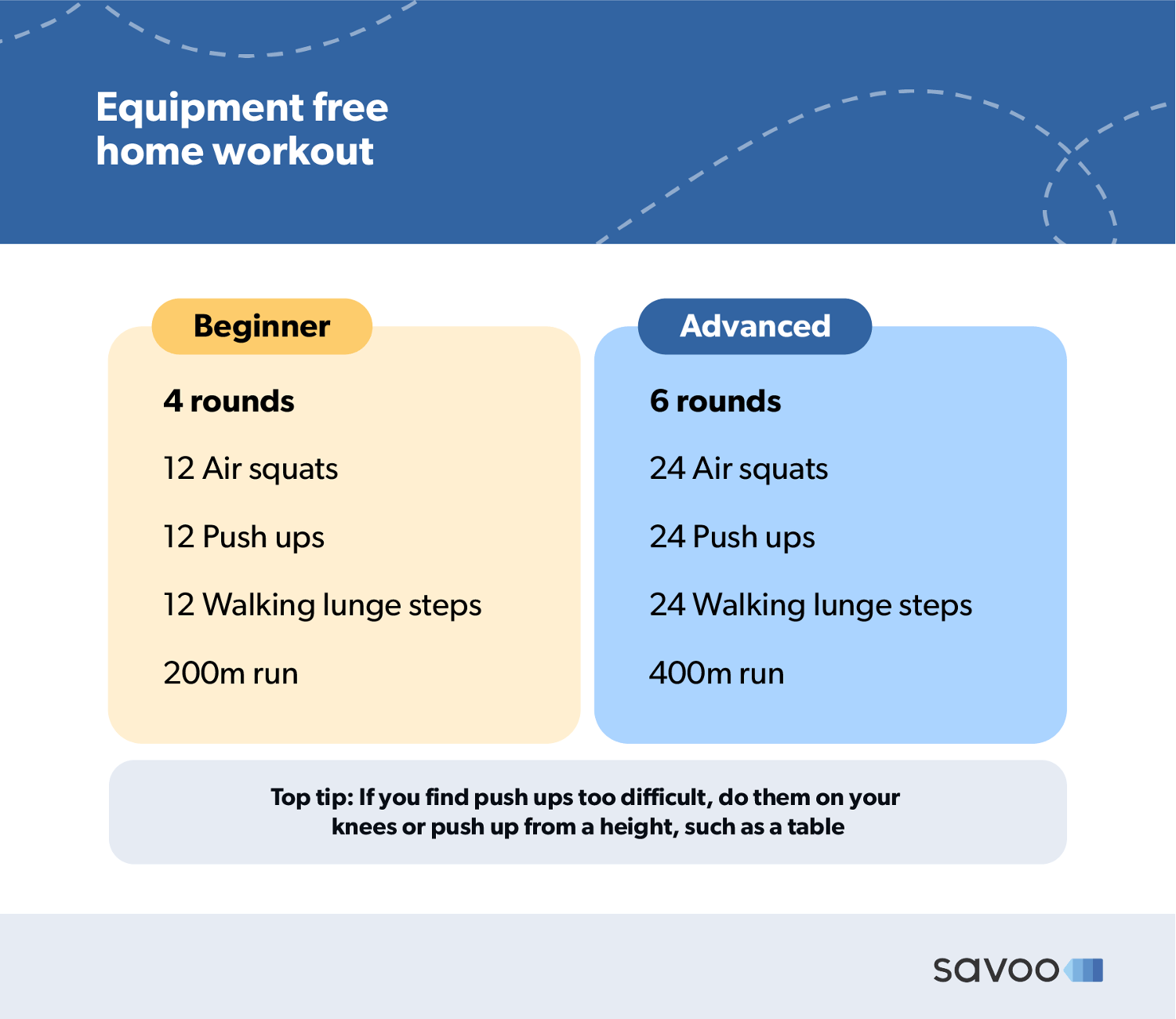
A lot of people rush to buy equipment, but you can get stronger with just bodyweight exercises. This saves money and helps you avoid injuries by learning the right way to move first. Beyond Lettings has assembled cheap ways to exercise at home for students that are definitely worth a look.
James Bickerstaff, Personal Trainer at OriGym says, ‘Push-ups, sit-ups, planks and lunges are all great for strengthening your muscles and increasing endurance with no equipment. The best part is, you can easily tailor the amount of reps and sets to your preferences and abilities.’
If you’re just beginning, you can try squats to a chair, push-ups on your knees, or shorter work intervals, like 20 seconds instead of 40. I like the 30:30 method, where you work for 30 seconds and rest for 30 seconds. Choose four to six exercises and repeat them for three rounds. Some good choices are squats, push-ups, mountain climbers, lunges, and planks. This routine is free and takes under 25 minutes.
Pete Williams, Functional Medicine Practitioner and Exercise Scientist at Functional Medicine Associates adds, ‘A mix of HIIT exercises improves cardiovascular health and builds strength, and while they’re effective for change, they’re also the most likely to cause injuries, especially for beginners. Water down intensity and duration until you're capable of going harder and help avoid injuries.’
Yoga for flexibility and stress relief
If high-intensity workouts aren’t for you, or you want something to balance them, yoga is a very affordable way to build strength, improve flexibility, and support your mental wellbeing at home. From my experience, yoga is one of the most sustainable ways to exercise at home. It’s a low-impact practice that brings together movement, breathing, and mindfulness.
So why is yoga such a good choice if you’re on a budget? You get both physical and mental benefits without needing equipment, subscriptions, or much space. All you need is a quiet spot and comfortable clothes.
Luke Hughes, Personal Trainer at Active Careers says, ‘Yoga is a training discipline that dates back over 5,000 years and will continue to grow in popularity. This is because it has multiple benefits and functions that aid our mental and physical wellbeing, such as improving our strength, joint health, balance and flexibility, in cohesion with reducing stress and anxiety levels.
‘The beauty of yoga is that it can be done from the comfort of your own home and can be easily adapted for different ability levels, plus you don't need any equipment, just a little bit of space to manoeuvre. You can adopt a different form of yoga based on your training aims and mood. For example, Ashtanga and vinyasa workouts are more vigorous in nature and often harnessed to build definition, strength and cardiovascular fitness. By contrast, restorative yoga is more relaxed and better served to help you to mentally decompress, enhance mood and improve posture.’
A common myth is that yoga is only about stretching. In fact, a good home yoga routine can:
- Build significant core strength.
- Improve joint stability and mobility.
- Support recovery from strength or HIIT sessions.
- Reduce stress-driven fatigue (which often derails fitness routines).
- Improve posture, especially if you work at a desk.
Yoga can also save you money by helping prevent injuries and burnout. When your body moves well and recovers properly, you’re much less likely to need physio visits, long breaks from training, or costly quick fixes.
If you’re new to yoga, it’s important to keep things simple and easy to access.
James Bickerstaff adds, ‘Platforms like YouTube have tons of free yoga content that you can use from the comfort of your own home. Search for beginner-friendly sessions, as this will be a great way to ease into practice and learn the different terminologies and movements.’
Here are some tips to get the most out of free online yoga sessions:
- Start with 15-20 minute beginner flows.
- Focus on learning correct alignment rather than rushing through poses.
- Choose one or two styles and stick with them for a few weeks.
- Prioritise consistency over complexity.
The real benefit of doing yoga at home isn’t about perfecting advanced poses. It’s about building a routine you can stick with week after week, all without spending any money.
Home Pilates workout for core strength
Pilates is a gentle form of exercise that helps build strength, improve posture, increase flexibility, and boost body awareness. It uses slow, controlled movements and focuses on core strength, good alignment, and breathing. Since mat-based Pilates doesn’t need special equipment, it’s an easy and affordable way to work out at home.
Pilates is a great way to save money because it emphasises moving well, not just moving more. Problems like poor posture, a weak core, and muscle imbalances often cause aches, pains, and minor injuries. These issues can lead to the need for physio or breaks from exercise. By building strength slowly and with control, you create a solid base that supports other workouts.
Pete Williams says, ‘Mat Pilates routines target the core muscles, improving posture, balance, and stability. This is perfect for strengthening the body at home. You can also often find free video routines online.’
If you’re new to Pilates, start with a short 15-20 minute mat session two or three times per week. Make sure you read our free guide on how to build muscle on a budget.
One of the biggest mistakes I see with Pilates is people rushing through the movements. Slow, controlled repetitions work much better than going fast. In my own training, I’ve noticed that doing simple, core-focused routines regularly can really improve posture and stability in just a few weeks. All you need is a little floor space.

Jump rope for a cheap cardio workout
If you’re looking for a cheap cardio workout that genuinely challenges you, a jump rope workout at home is hard to beat. According to an article by The Independent's Julia Musto, jumping rope is more effective cardio than running!
Jump rope (or skipping) is a high-energy, calorie-burning cardio exercise that involves swinging a rope beneath your feet and over your head in continuous rhythm. It improves coordination, agility and endurance while strengthening your calves, core and shoulders. Best of all, it delivers a serious cardiovascular workout for the price of one of the most affordable pieces of fitness equipment.
A simple skipping rope costs much less than a monthly gym membership, takes up hardly any space, and you can use it almost anywhere. Unlike treadmills, exercise bikes, or rowing machines, it’s one of the cheapest ways to get your heart rate up fast.
Luke Hughes says, ‘If you want a more cardiovascular-based workout that can make exercise a little more fun and engaging, getting a jump rope is a great solution. The high-impact nature of skipping can help improve your bone health, strengthen joints, burn fat and improve things like coordination and balance. You can acquire a skipping rope from as little as £6 and you don't need to be an expert to reap the benefits.’
Full-body circuit workout at home
Doing a full-body circuit workout at home is a great way to build strength and boost your cardiovascular fitness without needing costly equipment. In circuit training, you move through different exercises for various muscle groups with little rest, which keeps your heart rate up and works your whole body.
Home circuit workouts are different from HIIT sessions, which are all about short, intense bursts of activity. Instead, you can do circuit workouts at a steady pace, making them easier to stick with and suitable for many fitness levels. They’re a good choice if you want a balanced, affordable routine you can keep up over time.
Most home circuit workouts use bodyweight exercises like these:
- Squats or jump squats.
- Push-ups.
- Lunges.
- Planks.
- Mountain climbers.
Luke Hughes says, ‘It costs nothing to set up your own training circuit using household furniture as props. Circuit training can improve your muscular endurance and cardiovascular fitness, and give you a comprehensive all-in-one body workout. Circuits are a great way of getting you to commit to a predesignated workout duration, can be executed in a short time period and don’t require much (if any) equipment. With circuit training, you can adjust the times of each exercise and rest gap based on your fitness levels and even adapt them to target certain muscle groups.
‘For example, if you wanted a 15-minute leg workout, you could select 5 bodyweight-based leg exercises such as air squats, side lunges, knee drivers, split lunges and single-leg glute bridge and then do each exercise for one minute with 30 seconds of rest in between each exercise. You should then repeat the circuit twice.’
Circuit training can help you save money because you won’t feel pressured to buy special equipment. You can achieve progressive overload without machines, racks, or resistance systems.
Pete Williams adds, ‘Use everyday objects like water bottles as light weights, a sturdy chair for tricep dips, or a towel for sliders to create a strength circuit.’
The only home workout equipment you really need
You don’t need a fully equipped home gym to see amazing results. Instead, focus on affordable workout equipment you can fit in the space you have, which is also specific to your fitness goals.
Here are some home gym essentials you might want to consider and some insight from fitness experts:
- Kettlebells: Great for strength, power and endurance exercises, kettlebells help with full-body workouts and improving functional fitness.
- Dumbbells: A key piece of equipment for building strength and muscle, dumbbells allow for a wide range of exercises and are easy to store.
- Bodyweight vest: As James Bickerstaff suggests, ‘If you’re looking to build greater strength and burn more calories, you should invest in a weighted vest.’ It adds resistance to bodyweight exercises for enhanced intensity.
- Resistance bands: Compact and adaptable, resistance bands are ‘versatile for strength and mobility work,' according to Pete Williams. They’re perfect for toning muscles and increasing flexibility.
- Jump rope: Ideal for cardio, coordination and agility, a jump rope is an affordable and effective tool for burning calories and improving cardiovascular health.
- Yoga mat: A must-have for floor exercises and stretching. James Bickerstaff highlights that ‘a good quality yoga mat is essential for comfort, protecting your joints from hard surfaces, and preventing balance loss.’
- Pull-up bar: Great for building upper body and core strength, pull-up bars can be installed in doorways or mounted to walls. Just make sure it’s installed correctly to avoid injury!
- Foam roller: Perfect for recovery, foam rollers help reduce muscle soreness, improve flexibility and enhance blood flow after workouts.
- Exercise ball: Useful for core workouts, stability training and improving balance, exercise balls can mix up your routine.
- Suspension straps: These allow for bodyweight exercises targeting strength, stability and flexibility.
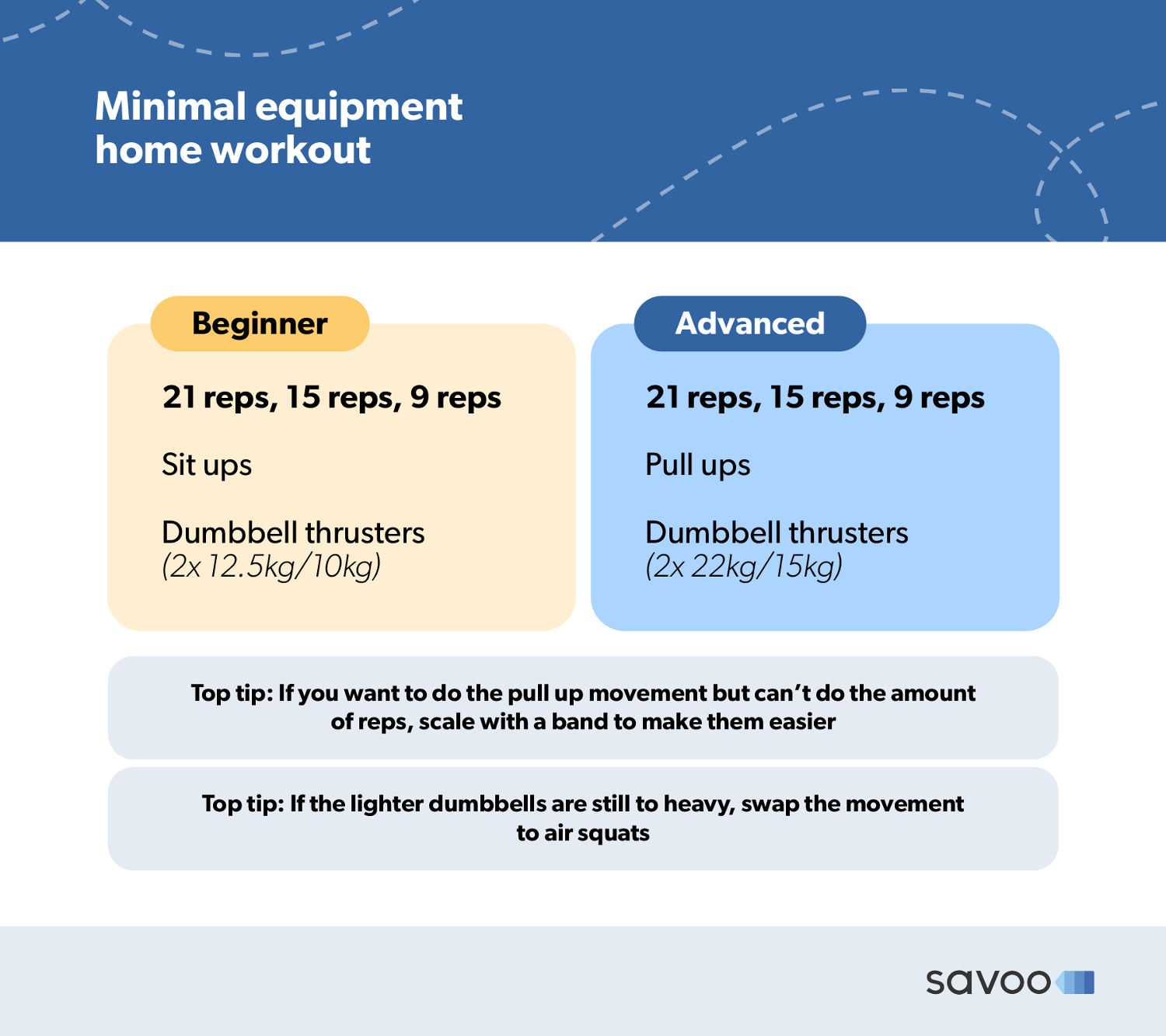
If you’re looking to incorporate some basic equipment into your home workouts, here’s a quick and effective workout plan using just a pair of dumbbells and a pull-up bar. You can tailor it to your fitness level by following the beginner or advanced variations below.
How much does basic fitness equipment cost?
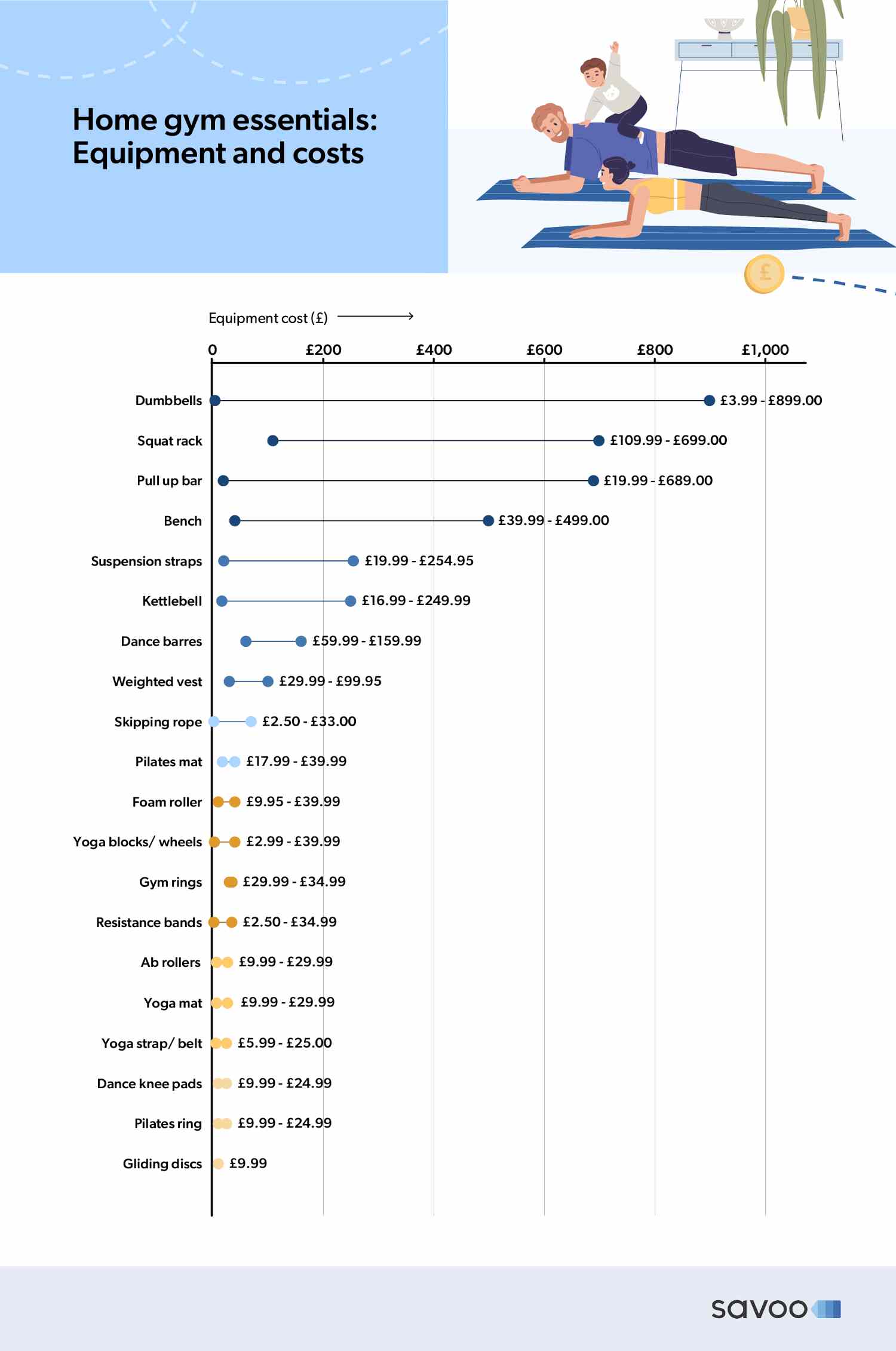
Depending on the type of workout you’re looking to do at home, you may need some basic equipment. The need to spend money can be a stumbling block for many people’s fitness journey, but it doesn’t have to. Lots of equipment can be pretty affordable, and there are ways to reduce the cost further by using health and fitness voucher codes which you can use at popular fitness retailers including Decathalon, Sports Direct, MyProtein, and more.
Here is what you might expect to pay for some basic fitness equipment for an effective home workout.
How much do home gym machines cost?
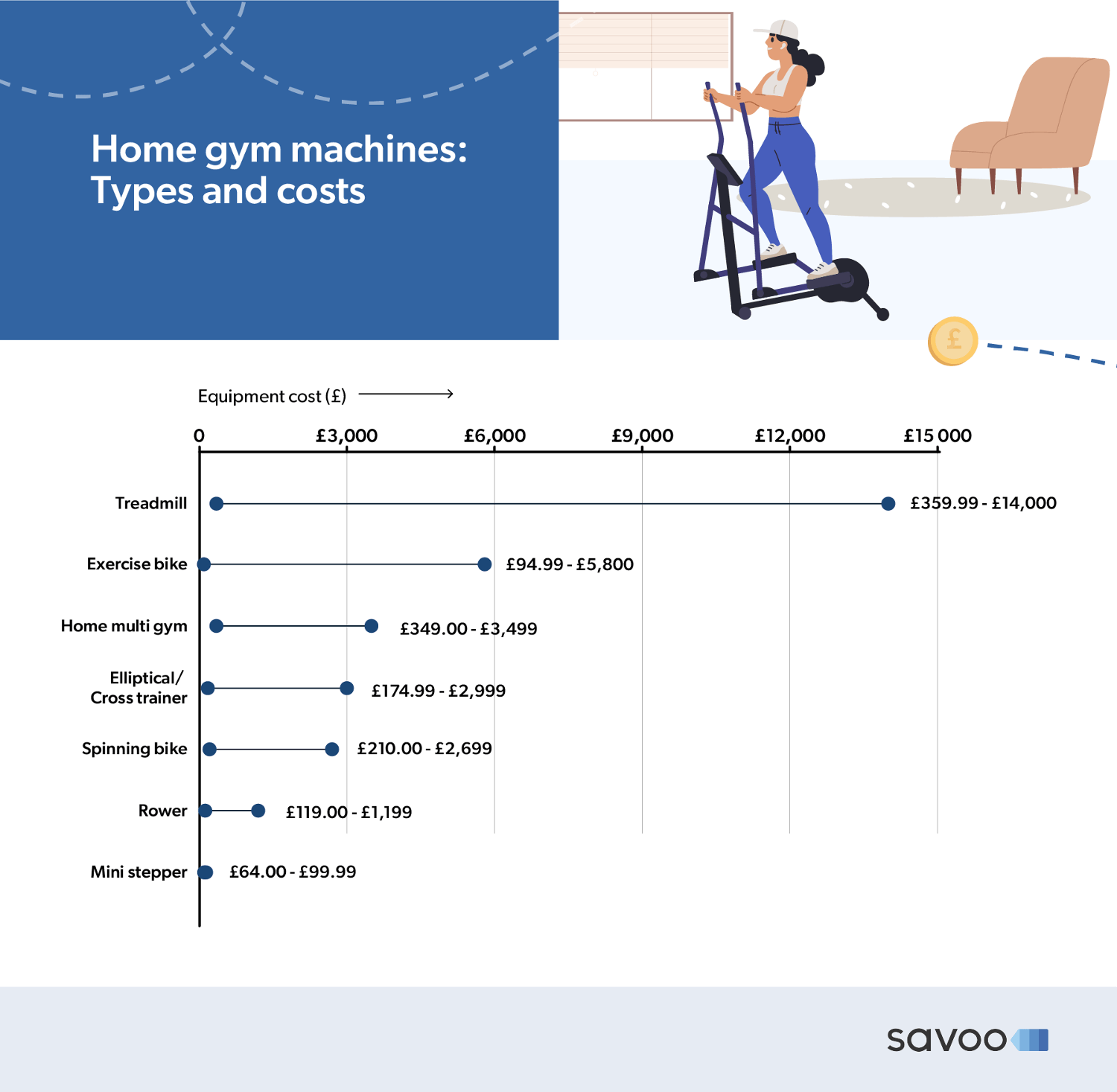
While you can have a fantastic workout at home without advanced equipment, home gym machines can vary your routine and help you achieve your fitness goals. While not always cheap, machines should be looked at as an investment, so long as you have the space and budget available. Not only can they boost your workout, but over time it can work out cheaper than going to the gym (and not forgetting the cost of actually getting there).
For more information, read our blog post answering how much would a home gym cost? If being a member of a gym is non-negotiable, learn how to save money on gym memberships.
5 New Fitness Trends for 2026
This year promises to bring exciting trends that will continue to change how we approach health and wellbeing. Staying updated on these innovations can enhance workouts, keep you motivated and introduce cutting-edge techniques into your routines. Here’s what personal trainers predict for the fitness landscape in 2026:
1. AI Integration in fitness technology
Wearable technology, like smartwatches, will use AI to monitor performance, provide feedback in real-time and even help prevent injuries.
James Bickerstaff knows the impact AI will have on fitness, saying, ‘There are a bunch of studies online that have already shown that AI software can monitor your athletic performance and provide detailed feedback on how to improve your performance and even prevent injuries, so expect to see much more AI integration this year.’
2. Rise of exercise snacks
Exercise snacks (not the food kind), or short bursts of 2-5-minute workouts, are gaining traction as studies highlight their effectiveness for health. These quick sessions fit into busy schedules, allowing people to improve fitness at home, work, or on the go.
With personalised AI-driven data, these mini workouts will become more targeted and efficient, further boosting their appeal.
Pete Williams says: ‘Snacks will become hugely popular as the scientific evidence shows how effective they are for optimising health. This changes the need to always go to the gym for a certain amount of time. Getting the heart rate up in these snacks has real benefits and fits more into our busy lives. We can always find a frequent few minutes in the day either at home or at work.’
3. Community-centric fitness
The importance of social connections for wellbeing will lead to a rise in community-focused fitness in 2026.
Eloise Skinner, Author and Fitness Instructor, says, ‘Since research demonstrates the importance of community ties, we're more likely to see community aspects integrated into fitness trends.’ So, expect more clubs, fitness socials, team sports and local competitions to emerge which is great for motivation.’
4. Hybrid athlete competitions
Competitive fitness for hybrid athletes, combining endurance, strength and functional fitness, will continue to grow.
Scotty Moore, CF-L1 Trainer, BWL certified coach, says, ‘We’re going to see the rise of fitness competitions aimed at the ‘hybrid’ athletes. We’ve had competitive CrossFit and functional fitness for the longest time. The world has gone Hyrox mad the last couple of years and with other names coming through like the World Fitness Project I think we’re going to see all sorts of independent events out there and a lot of athletes crossing over between them all on the regular and making a name for themselves.’
5. Strength training renaissance
The trend of hybrid fitness and endurance events will come full circle, bringing strength training back into the spotlight.
Strongman and strongwoman competitions are gaining popularity, with increased inclusivity and recognition. More people will embrace gym routines and structured programs to build strength and resilience.
Sean Pritchard, British Army physical training instructor and owner of CrossFit WDN says, ‘I predict the fitness trend will have come full circle; we’ve seen the endurance events become very popular and hybrid athletes are everywhere - I think 2025 is going to be about strength.’
Final thoughts: Build an affordable home workout that lasts
Starting a workout routine at home can be a great way to improve your health and save money. The most important thing isn’t choosing the toughest program or the latest equipment. It’s about building a routine that you can stick to and afford. To get you started, check out the NHS approved home workout videos.
As I’ve highlighted, you don’t need a dedicated gym room or a large budget to improve your strength, endurance and mobility. Bodyweight HIIT, yoga, Pilates, skipping and full-body circuit workouts can all be done in a small space with little to no equipment. When you focus on consistency rather than cost, results will follow naturally.
To help you get started, you can find great discounts at loads of popular health and fitness retailers that give you big savings on the equipment you need. Browse health and fitness voucher codes today.
Frequently Asked Questions
What is the best exercise to do at home?
The best home exercise is one you can do safely, regularly, and with enough effort to work your whole body. For most people, bodyweight moves like squats, push-ups, lunges, and planks are a great place to start. These exercises work several muscle groups at once, help build strength and stability, and don’t need any equipment or much space.
If you want one well-rounded option, a full-body bodyweight circuit is a great choice. It helps you get stronger, burn fat, and boost endurance. You can make it easier or harder by changing the number of reps, the speed, or the rest time. Alternatively, try DAREBEE's exercise of the day.
What are the 5 types of exercise?
The five main types of exercise are:
- Cardiovascular or aerobic exercise includes activities that raise your heart rate and help your heart and lungs, like brisk walking, running, cycling, or skipping.
- Strength training involves exercises that build muscle and make your bones stronger. This can include bodyweight moves like push-ups and squats, or using weights and resistance bands.
- Flexibility training uses movements that help you move more easily and feel less stiff, such as stretching or yoga.
- Balance training includes exercises that help you stay steady and coordinated, which becomes more important as you get older. Examples are single-leg stands or tai chi.
- Mobility training uses controlled movements to help your joints work better and improve how you move overall. It often combines strength and flexibility exercises.
A good fitness routine includes all five types of exercise. This helps you build strength, keep your heart healthy, and avoid injuries over time.
What exercise burns the most belly fat?
There isn’t one exercise that targets belly fat alone. Fat loss happens all over your body when you keep a steady calorie deficit through both exercise and diet. Still, high-intensity cardio like HIIT, jump rope, running, and full-body circuits can help you burn more calories quickly, which may lower overall body fat, including around your stomach.
Strength training matters just as much. When you build muscle with moves like squats, lunges, push-ups, and deadlifts, your body burns more calories even at rest. For the best results, mix full-body strength workouts with regular cardio and stick to a balanced, realistic eating plan.
