


How to Save Money on Travel Insurance
Key Takeaways
- Spend your money on what really matters: Make sure you have good medical cover and cancellation protection, and skip extras like high baggage limits or add-ons you probably will not need.
- Travel insurance prices vary widely based on risk factors: Consider things like where you are going, your age, and the type of trip. Knowing this helps you find real value, not just the lowest price.
- The cheapest policy might not help you when you need it most: Small details in the terms and the amount of cover often decide if your claim will be paid.
Travel insurance is not only more important these days, but it is also getting pricier. This guide will help you make sense of your options and find good value for your money.
Recent MoneySuperMarket data shows the average annual multi-trip policy costs about £57.56, and a basic single-trip policy averages £24. At first, these numbers might not seem worrying. But if you look more closely, you can see that prices change dramatically based on your age, where you are going, and the type of cover you choose. For example, travellers over 85 now pay an average of £128 or more, and long-haul or specialist policies can cost almost nine times as much as a standard trip.
At the same time, Insurers are paying out more than ever before. According to research by Dale Robinson at Just Travel Cover, UK providers paid over £472 million in claims for more than 500,000 cases, with medical emergencies accounting for the largest share. This puts pressure on premiums. More claims mean higher costs, which in turn lead to more expensive policies.
After years of budget travel, I’ve learned how to find affordable travel insurance that still works when you need it. If you know what to look for, travel insurance can be one of the simplest ways to save money on your trip.
What’s in Savoo’s Guide to Saving Money on Travel Insurance
- Understanding travel insurance
- How much is travel insurance?
- The importance of medical cover, above everything else
- 20 proven ways to get cheaper travel insurance
- What you need to know when searching for affordable travel insurance
- Travel insurance costs by destination
- When travel insurance might not pay out
- Spend smarter on travel cover, not just less
- Cheaper travel insurance frequently asked questions
Understanding travel insurance: What are you actually paying for?
Travel insurance is a set of safeguards that protects travellers from unforeseen expenses. Some cover options are essential, some are optional, and some you might not need at all. The real challenge isn’t just finding a cheap insurance policy, but understanding what you’re actually getting.
Two travel insurance policies might look the same at first, with similar wording and prices, but they can offer very different levels of protection when you need it most.
The 5 core components of travel insurance
Most standard travel cover policies are based on a few main parts. These are the things you’re really paying for:
- Emergency medical cover
-
Medical cover is the most important part of any policy. It covers hospital treatment, emergency care, and getting you back to the UK if needed. Without this cover, costs can rise quickly, especially in places like the US, where even small treatments can cost thousands.
- Cancellation and curtailment
-
If you have to cancel or cut your trip short due to illness, injury, or an unexpected event, this aspect of travel cover reimburses you for non-refundable costs. Flights, hotels, and excursions can add up fast.
- Baggage and personal belongings
-
Coverage for items that are lost, stolen, or damaged. It’s useful, but it often gets more attention than it deserves. Many people buy too much cover here, not realising that the payout per item is often quite low.
- Travel delays and missed departures
-
This pays out if you have long delays or miss a connection. The payouts are usually small, but they can help in certain situations.
- Personal liability
-
Protects against legal costs if you accidentally hurt someone or damage property while abroad. It’s not used often, but it can be very important if you need it.
Knowing the travel insurance basics is what sets apart cheap travel cover from a policy that’s actually good value. Low-cost policies often cut corners, while better ones focus on what matters most.
Where insurers build in cost
Not all parts of a travel insurance policy carry equal weight, and insurers know it.
In practice, some parts of your policy are much more likely to be used and cost the insurer more than others. Emergency medical cover and trip cancellation are the main examples. These two make up most claims and the largest payouts. One medical evacuation or hospital stay abroad can cost more than hundreds of smaller claims put together.
Premiums are largely driven by:
- Destination (healthcare costs abroad).
- Age and medical history.
- Trip length and frequency.
- Level of medical and cancellation cover.
However, many policies include extra features that raise the price but offer little real value to most travellers. Think:
- High baggage limits you’ll never reach.
- Specialist activity cover you won’t use.
- Add-ons like gadget insurance that duplicate existing cover.
Cutting these extras is often the easiest way to save money on travel insurance without reducing your coverage.
Excess: The fine print that matters
Every policy has an excess, which is the amount you pay if you make a claim.
Policies with lower premiums usually have higher excesses. This is a trade-off.
- You pay less at first, but more if you need to make a claim.
- Or you can pay a bit more now to have lower costs if you need to claim later.
If you travel often, changing the excess is an easy way to get the best price on holiday insurance.
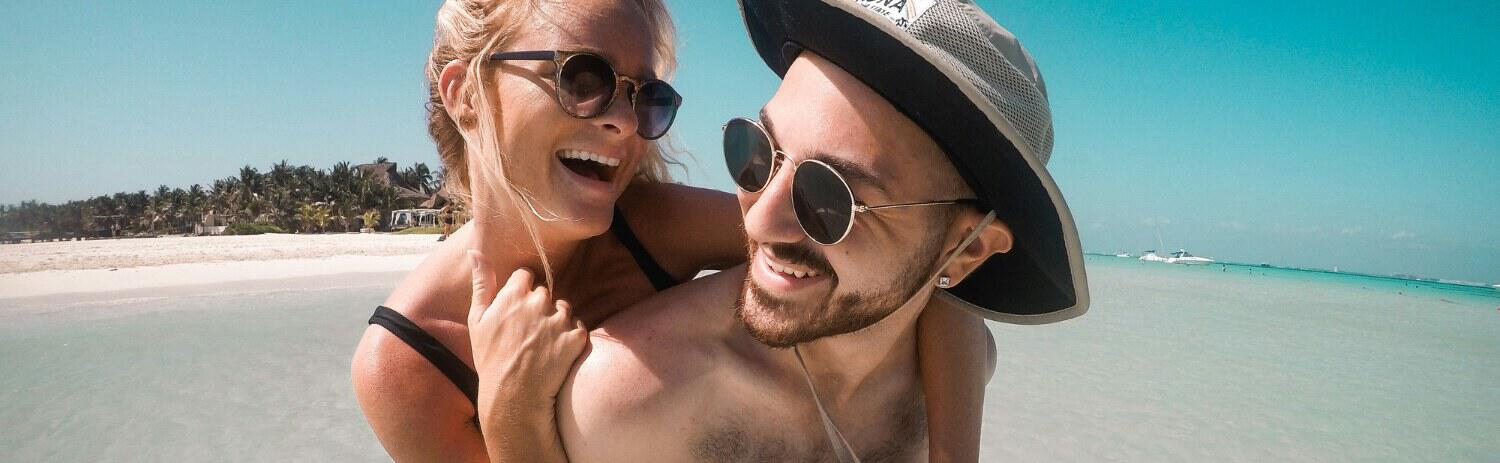 Photo by Joey Nicotra on Unsplash
How much is travel insurance?
The price of travel insurance can change a lot, often more than people expect. It depends on things like your destination, how long you’ll be away, and the type of cover you choose.
There isn’t a single standard cost, but MoneySuperMarket and UK travel insurance cost data can help you see if a quote is fair or overpriced:
| Policy Type | Typical Cost (UK Average) |
|---|---|
| Single trip (Europe, 1 week) | £15 – £25 |
| Single trip (Worldwide, 1-2 weeks) | £35 – £60 |
| Annual multi-trip (Europe) | £40 – £60 |
| Annual multi-trip (Worldwide) | £80 – £150 |
| Backpacker / long-stay | £190+ |
A single-trip policy usually costs around £24, while an annual multi-trip policy averages £57.56. Prices are higher for long-haul travel or more comprehensive cover.
Most of the time, insurance is only a small part of your total holiday budget. Knowing these averages can help you find good value, not just the cheapest option.
The importance of medical cover, above everything else
If there’s one area not to economise on, it’s medical. Recent data from Which? shows that medical expenses account for 51.1% of all travel insurance claims.
A policy offering £1 million in medical cover might sound like plenty, but serious incidents overseas can cost even more. Experts recommend at least £2 to £5 million in medical cover, especially for longer trips.
Why medical claims are so expensive
Healthcare costs abroad, especially outside Europe, can rise quickly. Even a short hospital stay, a routine procedure, or medically assisted transport can lead to bills that most people would find hard to manage.
According to the Association of British Insurers, UK travel insurers paid out over £262 million in medical claims in a single year, highlighting the significance of this category.
These situations are not always rare or extreme. Many claims come from fairly common events like these:
- Slips and fractures while sightseeing.
- Sudden illnesses requiring hospitalisation.
- Infections or complications needing urgent treatment.
'Travel insurance can offer you peace of mind, knowing that you’re covered for things like emergency medical care should you fall ill or suffer an injury abroad. Be sure to read the full terms and conditions and disclose any pre-existing medical conditions to make sure you have the right cover for your needs, and speak to your insurer if anything is unclear.’
Real-world medical case studies
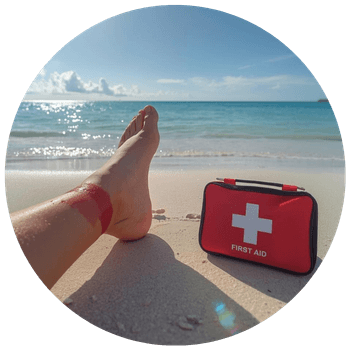
The medical aspect of travel insurance becomes much more real when you look at actual cases documented by the ABI:
- A UK traveller who suffered a fall in Spain required treatment and medical repatriation back to the UK, with total costs reaching £124,000.
- Another case involving illness abroad (Covid-related) in Cyprus resulted in £70,000 in treatment and return costs.
- Even where a GHIC card covered most treatment costs in France, a traveller was still left with £16,000 in additional expenses, including medical transport costs picked up by insurance.
These examples show one clear fact: the biggest financial risk is not losing your luggage, but needing medical care in the wrong place at the wrong time.
20 proven ways to get cheaper travel insurance
The best way to save money isn’t with a single trick. Instead, it’s about making a series of small, smart choices. When you use these strategies together, you’ll have a reliable way to find affordable travel insurance that actually works when you need it.
Get the timing right
Buy as soon as you book: You’ll be covered for cancellations right away, and you’ll also avoid paying higher prices at the last minute.
Avoid leaving it until the airport: If you buy a policy in a hurry, it’s unlikely to be the best deal. Airport policies can cost significantly more, as you’re paying for convenience.
Consider annual cover early in the year: If you have several trips planned, getting your insurance early can save you a lot of money.
Use comparison tools
Begin by checking comparison sites: These sites help you quickly see what the travel cover market has to offer, including tools like Compare the Market.
Always check with direct providers as well: Sometimes, brands like Post Office Travel Insurance or Tesco Travel Insurance offer better deals if you go to them directly.
Compare at least three different providers: Don’t just focus on price; check the cover limits, excess, and what’s actually included.
Only pay for the cover you actually need
Strip out unnecessary add-ons: Cruise cover, gadget insurance, winter sports coverage, and activity cover should only be added if they apply to your trip. Winter sports enthusiasts should check out our Skiing on a Budget blog for money-saving tips.
Reduce baggage cover if you pack light: Most policies set higher limits than most travellers actually use.
Don’t over-insure your cancellation value: Set your cancellation cover to match your trip cost, and avoid going higher.
Adjust your policy to lower the price
Increase your excess (carefully): Raising your excess can lower your premiums, but make sure it stays affordable for you. For example, if you raise your excess from £75 to £200, your policy might cost £10 to £20 less.
Choose single-trip vs annual wisely: If you travel more than twice a year, an annual policy usually offers better value.
Opt for basic cover tiers where appropriate: Premium plans often come with extras you might not need, but always ensure medical cover remains sufficient.
I have found that shifting your trip just outside peak times, such as travelling the week after schools return rather than during half-term, can sometimes lower insurance prices. The difference isn’t huge, but when I’ve compared quotes for similar trips just a few days apart, the off-peak option has sometimes been a bit cheaper.

Factor in your destination
Stick to European cover where possible: If you only need insurance for Europe, you’ll usually pay much less than for worldwide coverage.
Be realistic about high-cost destinations: Travel insurance for places like the USA or Caribbean is always more expensive due to medical costs, so plan your budget accordingly.
Make sure you are not paying for the same protection more than once
See what benefits your bank account offers: Some packaged bank accounts include travel insurance or similar coverage, but always check the limits and exclusions.
Review your home and credit card insurance together: Your home insurance may cover belongings abroad, while some credit cards include basic travel protection. Avoiding duplication can reduce your overall cost.
Get smart with medical and policy details
Always declare pre-existing conditions: If you do not disclose your conditions, your policy becomes invalid, and you lose your money.
Compare specialist providers if needed: Companies such as Staysure holiday insurance or Saga travel insurance often have better rates for medical coverage.
Use overlooked ways to reduce costs
Use GHIC and look for discounts or group policies: A GHIC card can reduce your upfront medical costs in Europe (though it doesn’t replace insurance), while travelling as a group or family and using voucher codes can unlock noticeable savings.
Choose providers with value, not just price
Balance cost with reputation: Well-known providers such as Admiral Travel Insurance or Sainsbury's Travel Insurance may cost a bit more, but they often make the claims process smoother and more reliable.
Where can I get online travel insurance deals?
Savoo makes it easy to find deals for trusted travel insurance providers and comparison platforms. Quickly check out the latest deals, voucher codes, and discounts to get affordable travel insurance. Book with confidence without having to search lots of different sites!






What you need to know when searching for affordable travel insurance
Before you start comparing cheap travel insurance, it helps to know what insurers are actually pricing. Premiums are not random; they are based on risk. The better you understand these factors, the easier it is to manage costs without losing important coverage.
Age is more than just a number; it affects price
Travel insurance usually costs more as you get older because the chance of medical claims goes up. For people aged 75-79, the average premium is around £89.77, according to MoneySuperMarket research.
This does not mean you have to pay high prices; it just means you should view the market differently.
To keep costs manageable:
- Check more than just the main comparison sites. Specialist providers like Saga travel insurance or Staysure holiday insurance often offer better prices for older travellers.
- If you travel more than once a year, consider annual policies. They can help lower your overall costs.
- Update your policy if your health changes instead of cancelling and buying a new one.
The most important thing is finding the right insurer, not just the lowest price you see advertised.
Risk profile: What you bring and do affects the price
Insurers look not only at your destination but also at how you travel.
If you bring expensive items or plan a trip with many activities, your chance of making a claim increases, and your premium will be higher as a result.
To stay in control:
- Be realistic about what you pack. Covering several high-value items can add up quickly.
- Know the item limits. Policies often set a maximum payout per item, regardless of the total coverage.
- Only add activity cover if you really need it. Many standard policies do not cover activities such as jet skiing, quad biking, or parasailing.
The goal is not to avoid all risk, but to avoid paying for insurance on risks you will not face.
Medical history: Transparency matters more than price
Pre-existing conditions are a major factor in pricing and are often misunderstood.
Insurers do not ask about your health just for formality. They are checking the chance of a claim, which directly affects your premium.
To navigate this properly:
- Declare anything you have been treated for, taken medication for, or had investigated. Since definitions can vary, it is safer to be cautious.
- Some policies may cost more or exclude certain conditions. This is standard practice.
- Look at specialist insurers rather than just the default providers, because prices can vary widely.
The goal is not just to find the cheapest quote, but to find one that will actually pay out when you need it.
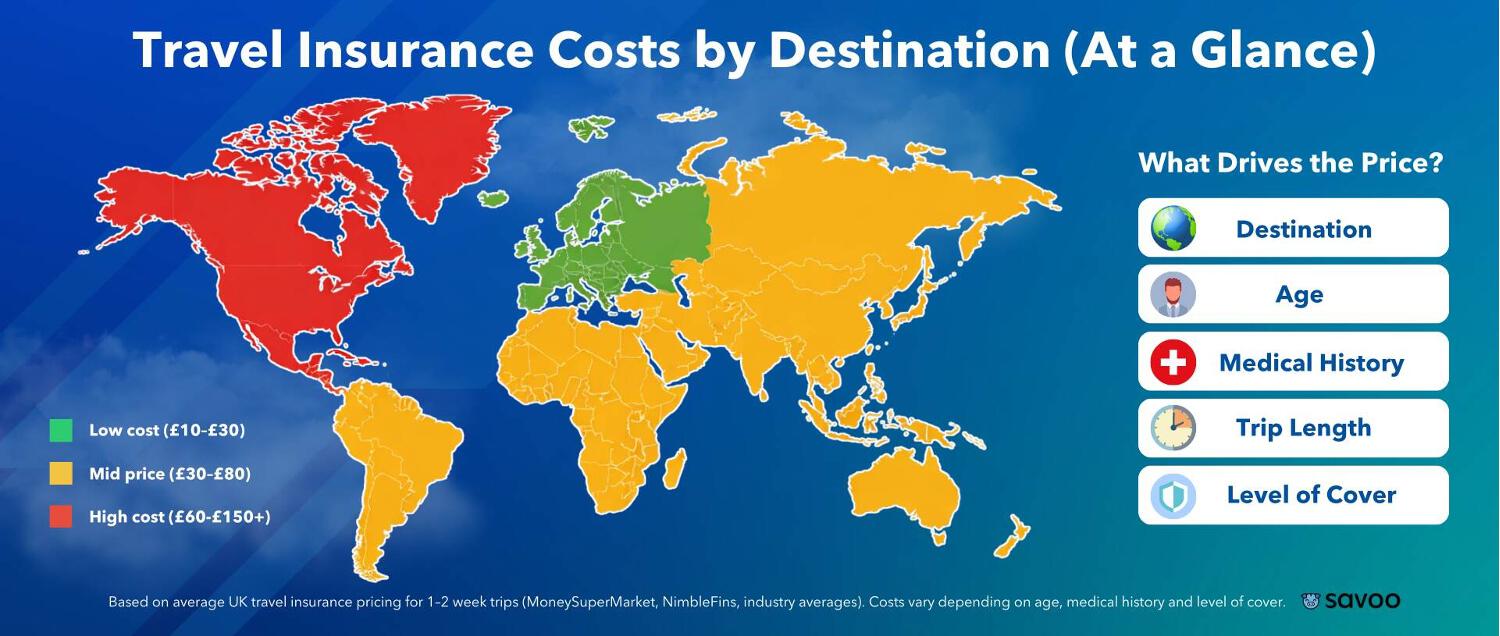
Destination: Where you travel affects the cost
Your destination directly affects your premium, mainly because of healthcare costs and the risk of needing to return home.
Broadly speaking:
- Policies for Europe are usually cheaper because treatment costs are lower and travel distances are shorter.
- Worldwide coverage costs more, especially if it includes the USA, Canada, or the Caribbean.
- Healthcare costs in the US are among the highest in the world, so premiums in those destinations are much higher.
Learn about the 10 Cheapest Holiday Destinations Abroad and when is the Best Time to Book a Holiday with our useful travel guides.
Where you buy your policy can change the price
Convenience can sometimes mean paying more.
Buying insurance when you book your flight or holiday might seem efficient, but it is rarely the best deal. These policies are usually:
- Priced with a built-in margin
- Limited in flexibility
- Designed for ease rather than value
You will almost always find a better deal by comparing policies on your own, either through a comparison site or by going directly to insurers.
Policy length: Small decision, big difference
The kind of policy you pick can make a big difference in what you pay over time.
In many cases:
- Annual multi-trip policies are usually cheaper if you travel more than twice a year.
- Couples or families can often save money by choosing a joint policy instead of separate ones.
- Frequent travellers benefit from having ongoing cover instead of buying single-trip policies each time.
When travel insurance might not pay out
Even the best travel insurance policies have limits. While coverage might seem complete, there are situations where your claim could be reduced or even denied.
The details differ by provider, but most policies share some common exclusions.
Undeclared medical conditions
If you don’t tell your insurer about a pre-existing condition when you buy your policy, any related claim could be affected. Even minor or well-managed conditions count, so it’s best to declare them from the start.
Unattended belongings
Many policies won’t cover items left unattended in public places, like on a beach or in a café. Most require you to take “reasonable care" of your belongings, though what counts as reasonable can vary.
Alcohol or drug-related incidents
If something happens while you’re under the influence of alcohol or drugs, your insurer might limit or reject your claim. It depends on the situation and the exact wording of your policy.
Travelling against official advice
If you visit a place where the Foreign, Commonwealth & Development Office (FCDO) advises against all but essential travel, your insurance might not cover you.
Activities outside your cover
Standard policies don’t cover every activity. If you take part in high-risk activities, such as certain water sports or adventure experiences, you’ll need the right add-on, or you may not be covered.
Conclusion: Spend smarter on travel cover, not just less
Saving money on travel insurance isn’t about choosing the lowest price policy. The travellers who get the best deals aren’t just looking for bargains. Make smart choices and invest in coverage that truly protects you.
After years of comparing policies for different trips, I’ve seen the same pattern. Prices go up and down, but the basics stay the same. Medical coverage is the most important risk, as small details can determine whether your claim is paid.
The cheapest policy often fails when you need it most. Once you understand this, finding good value travel insurance in 2026 will become much easier.
Frequently Asked Questions
Should I buy travel insurance when booking my holiday?
In most cases, it’s a good idea to get travel insurance as soon as you book your holiday. This way, you’re covered right away for things like cancellations, which is often one of the most important parts of a policy.
You don’t have to buy insurance from the airline or travel company when you checkout. These options are there for convenience but might not offer the best value. It’s better to book your trip first, then compare different policies to find one that suits your needs and budget.
Which travel insurance does Martin Lewis recommend?
Martin Lewis does not suggest just one travel insurance provider. He advises people to pick a policy that fits their needs, not just to go with a certain brand.
As the founder of MoneySavingExpert, he regularly suggests the following:
- Compare several providers by using trusted comparison websites.
- Make sure medical cover is your top priority, aiming for at least £5 million, instead of focusing on extra features.
- Always declare any pre-existing medical conditions to avoid invalidating your claims.
- Buy your insurance as soon as you book your trip. This way, your cancellation cover starts right away.
- Check if you already have cover through your bank account or credit card before you buy a new policy.
The main point is to find travel insurance that suits you and offers good value, not just the cheapest deal or a certain insurer.
What travel insurance do you need for a cruise?
If you’re planning a cruise, you’ll usually need travel insurance that covers cruise-specific risks. This can be included in your policy or added as an upgrade. Standard travel insurance often isn’t enough, since cruises have risks that don’t come with regular holidays.
At the very least, your policy should cover the following:
- Emergency medical cover (with evacuation)
- Repatriation back to the UK
- Cancellation and curtailment cover
- Missed port or itinerary change cover
- Cabin confinement cover
- Cruise interruption and unused excursions
You should also check if your cruise line requires a minimum level of insurance before you travel. Some won’t let you board without it.
You May Also Like

Ways to Save Money at the Edinburgh Fringe
by John Connellan | 2/8/2026
The Cheapest May Bank Holiday Destinations
by John Connellan | 3/4/2026