


Ways to Save Money on Your Energy Bills
Updated September 7, 2026
Key Takeaways
- Small energy-saving changes can add up, so focus on practical habits that reduce waste without making your home less comfortable.
- Heating and hot water are the biggest areas to target, accounting for more than half of the energy used in a typical home.
- Check the whole cost of your energy tariff, including standing charges, rather than comparing unit rates alone.
- Don't struggle with an unaffordable energy bill alone: speak to your supplier and check whether you qualify for support such as the Warm Home Discount or energy-efficiency grants.
Energy bills are one of those household costs I never quite stop thinking about. My partner would probably say I think about them rather more than necessary. But when something costs your household well over £1,000 a year, I want to know whether we're paying more than we need to.
And in 2026, keeping an eye on your energy use still matters. From 1 July to 30 September 2026, Ofgem's energy price cap is £1,862 a year for a typical household paying by Direct Debit, a 13% increase on the previous cap period. Electricity under the cap averages 26.11p per kWh and gas 7.33p per kWh.
It's important to understand what that £1,862 figure means. The energy price cap isn't a limit on your total bill. It restricts the unit rates and standing charges suppliers can apply to default tariffs. Use more energy, and you'll still pay more; use less, and you'll pay less. Your actual bill also depends on where you live, how you pay and the type of meter you have.
For this guide, I'm much more interested in the small changes that reduce waste without making everyday life worse. From the way you use appliances to the tariff you're paying, and how effectively your home holds onto heat. Some changes take seconds, some require a little more effort, and a few may involve spending money upfront to save more over the longer term.
What’s in Savoo’s How to Save on Energy Bills Guide
- Where does your energy bill actually go?
- Heating and hot water: your biggest energy expense
- Which household appliances use the most energy?
- Understanding energy standing charges
- How much can you realistically save on energy bills?
- 9 simple tips to help you save money on your energy bills
- What help is available if you’re struggling with energy bills
- What to do if your energy bill suddenly increases
- Final thoughts: Small changes, sensible savings
- Energy savings FAQs
Where does your energy bill actually go?
Before looking for ways to save money on your energy bills, it helps to know what you're actually paying for. Not every appliance deserves the same attention.
I'm as guilty as anyone of walking around the house turning off lights that have been left on, but there's little point in obsessing over an LED bulb while ignoring the heating. Heating and hot water account for more than half of the energy used in a typical home, according to the Energy Saving Trust.
That makes heating the obvious place to look for bigger savings, although what consumes the most energy in your home depends on your heating system, property, and habits.
Heating and hot water: your biggest energy expense
For homes with gas central heating, the boiler is likely to account for a substantial share of annual energy consumption. It isn't just keeping the rooms warm either. Energy is also needed to provide hot water for showers, baths and taps.
This is also why your energy use can change so dramatically with the seasons. A fridge runs throughout July and January, but your central heating might barely come on during one and work for several hours a day during the other.
It doesn't mean you should simply turn the heating off and put up with being cold. It means heating is one of the first places to investigate if you're trying to make a meaningful reduction to your energy use. How efficiently your boiler operates, your thermostat setting, heating schedule, insulation and how well you control individual rooms can all make a difference.
Which household appliances use the most energy?
Once heating and hot water are accounted for, electricity use is spread across lots of smaller jobs. Some are much more expensive than others.
As a rule of thumb, I pay particular attention to appliances that generate heat, cool things, or run for long periods. The Energy Saving Trust estimates that washing machines, dishwashers and tumble dryers together account for around 14% of a typical energy bill, largely because of the electricity required to heat water or air.
That means some of the appliances worth watching include:
- Tumble dryers, washing machines and dishwashers: heating water or air takes plenty of energy, so how often and how efficiently you run them matters.
- Fridges and freezers: they don't necessarily draw huge amounts of power at once, but they're switched on 24 hours a day, 365 days a year.
- Ovens, hobs, kettles and microwaves: cooking accounts for a smaller part of overall household consumption, but frequent use adds up. Kitchen appliances such as these account for around 4% of a typical energy bill.
- TVs, computers and games consoles: individually they can seem relatively cheap to run, but long hours of daily use and multiple devices can change the picture.
- Lighting: modern LED bulbs use relatively little electricity, which is good news. It also means switching off a single LED five minutes earlier isn't where I'd concentrate my energy-saving efforts.
There is a useful lesson here: frequency matters as much as power. Something that uses a lot of electricity for 10 minutes isn't automatically more expensive over the year than something that draws less continuously.
Understanding energy standing charges
Even if you become incredibly good at cutting your energy use, there's one part of your bill you can't reduce simply by switching things off: the daily standing charge.
This is a fixed daily amount you pay for being connected to the energy network, regardless of how much gas or electricity you use. If you have both gas and electricity, you'll normally pay a separate standing charge for each.
That's worth knowing when you're working out how much an energy-saving change could actually save you. If my partner and I went away for a fortnight and used virtually no energy at home, for example, we'd still return to a bill containing 14 days' worth of standing charges.
Can you avoid energy standing charges?
Some suppliers offer tariffs with no standing charge, but that doesn't automatically make them cheaper. The trade-off can be higher unit rates, so you'll need to compare the total estimated annual cost based on how much energy you actually use.
For most households, the practical way to reduce an energy bill is to focus on the costs you can control. They include the amount of gas and electricity you consume and the unit rates you pay.
When comparing energy tariffs, a good tip is not to look at the headline unit rate alone. Check the standing charge for both fuels alongside it. A tariff with a slightly lower price per kWh could still work out more expensive overall if its daily charges are considerably higher.
"In theory, you could save over £315 on a typical dual fuel bill over the course of a year (using July 2026 price cap rates), although the actual amount is likely to be less because at least some of those costs are recovered from the higher unit rates you’re charged."
How much can you realistically save on energy bills?
There's no single figure for how much you can save on energy bills. A family in a draughty four-bedroom house with an older boiler has very different opportunities than someone already keeping a close eye on energy use in a modern flat.
Ofgem makes the same point: potential savings depend on your home, the appliances and heating systems you have, and how you use them.
What I can do is put some numbers against common changes. The Energy Saving Trust estimates that its ten everyday energy-saving measures could collectively save a typical British household up to £351 a year.
Here are a few examples of what relatively small changes could be worth:
| Energy-saving change | Potential annual saving |
|---|---|
| Avoid using the tumble dryer and dry clothes outside or on racks instead | £50 |
| Keep showers to four minutes | £45 |
| Switch appliances off standby | £45 |
| Wash clothes at 30°C and use the washing machine once less per week | £27 |
| Run the dishwasher once less per week by waiting until it's full | £11 |
| Install a programmer, room thermostat and thermostatic radiator valves if you don't already have them | £110 |
Savings are Energy Saving Trust estimates for a typical household in Great Britain and will vary according to your home and existing energy use.
I wouldn’t just add up everything in that table right away. Some of the estimates might overlap, and you could already be doing some of these things.
Instead, see it as a helpful reminder that you don’t need one big change to save energy. At home, I prefer finding a few changes that each save £20, £30, or £50 a year without making life less comfortable. When you add up enough of these small savings, they can really lower your bill.
9 simple tips to help you save money on your energy bills
Knowing where your energy goes is useful, but the important part is what you do about it. The good news is that saving money on your energy bills doesn't have to mean sitting in a cold house or making expensive home improvements.
The following nine tips focus on practical changes that can reduce energy waste, make your home more efficient, and help you pay less. Some could save you considerably more than others, but even the smaller changes can add up over the course of a year.
1 Upgrade your appliances
Older appliances can be surprisingly expensive to run, particularly those such as fridges and freezers that are switched on around the clock. Newer models have generally become much more energy efficient, so replacing an ageing appliance can reduce both your electricity use and running costs. According to Kato Electrical, old refrigerators typically use 66% more energy than new ones.
However, I wouldn't replace a perfectly good appliance just because a newer one uses less electricity. Spending £500 to save £20 a year isn't much of a money-saving strategy. In our house, I tend to think about energy efficiency when something is already approaching the end of its life and needs replacing.
When that time comes, check the energy label before you buy. UK energy labels rate many household appliances from A (most efficient) to G (least efficient), and you'll also find information about energy consumption that can help you compare models. The rating system was deliberately made tougher in 2021, so don't be put off if an efficient modern appliance doesn't have the A+++ rating you might remember from older labels.
2 Improve your insulation and seal gaps
PowertoSwitch estimates that you lose around 35% of your home’s heat through poor insulation and gaps around windows and doors. That’s more than a third, so it’s vital that you improve your insulation and seal any gaps that are forcing you to unintentionally use more energy. And it doesn’t have to be a big and expensive job, either. There are DIY ways to add weatherstrips to your doors and insulation to your loft. Even closing your curtains while the central heating is on can help prevent heat from escaping, boosting energy efficiency.
Smart thermostats are a fantastic way to track your energy usage and control your home’s temperature with minimal effort. You can make tiny tweaks to your temperature and schedule, and even boost your central heating while you’re out to make sure your home is nice and welcoming from the moment you walk in the door.
"Having an energy-efficient heating system that can be controlled easily will help reduce heating bills as it won’t need to work as hard to heat your home. In addition, turning the thermostat down by just one degree could save you around £80 a year on your heating bills. When heating your home, a cheap way to help keep the heat in is to add some reflector panels behind your radiators. These will help spread the heat around quicker as the panels reflect the heat back into the room, keeping you warmer for longer."
3 Unplug electronics when not in use
Have you ever heard of phantom energy? This is the energy used by electronics when they’re plugged in and in standby mode, but aren’t actually in use. By leaving things on standby, you unwittingly increase your energy consumption and, therefore, your energy bills.
Data shows that 10% of energy bills are due to phantom energy. That means, if you switch things off when not in use, you’ll save energy, which will make a big difference in what you pay.
You don't need to spend your evenings crawling behind furniture pulling out plugs, either. Start with the easy wins:
- Switch TVs, games consoles and computers off properly rather than automatically leaving them in standby mode.
- Turn off chargers at the socket once your phone, laptop or other device has finished charging.
- Use switchable extension leads where several devices are grouped together, so you can turn everything off in one go.
- Check your device settings. Some TVs, consoles and computers have energy-saving or automatic power-down modes that do the work for you.
- Don't switch everything off indiscriminately. Fridges and freezers obviously need continuous power, while some smart devices, broadband routers and recording equipment may need to remain connected or perform updates while you're not using them.
It's a small habit rather than a huge lifestyle change, but that's precisely why I like it. For more details on how smart technology can reduce your energy usage, take a look at our 10 Cool Ways AI Can Save You Money We Bet You Didn’t Know.
4 Use LED light bulbs
Where possible, switch out those old lightbulbs and replace them with LED bulbs. Not only are they up to 90% more energy efficient but they’ll also last far longer. If they’re switched on for eight hours a day, they should last around 20 years! Also, remember the easiest way to save on lighting: turn off the lights when you leave a room.
The savings from one bulb might not sound life-changing. Ofgem says switching an old bulb for an energy-efficient LED could save up to £4 per bulb each year. But count how many bulbs you have around your home and it starts to become much more interesting.
When you shop for LEDs, focus on lumens instead of watts. Watts show how much energy a bulb uses, but lumens measure the amount of light it gives off. This helps you pick an energy-saving LED that still provides the brightness you need.
5 Cut the cost of heating your water
Saving water doesn’t just reduce your water bill if you’re on a meter. Every time you have a hot shower, run a hot tap or fill a bath, you’re also paying for the energy needed to heat that water.
This makes the bathroom an easy place to find savings. The Energy Saving Trust estimates that keeping showers to four minutes could save a typical household in Great Britain around £45 a year on energy bills, as well as approximately 17,000 litres of water.
My partner and I certainly aren’t timing every shower with a stopwatch. There are some much less painful ways to reduce what you spend:
- Spend a little less time in the shower. If you’re prone to losing track of time, try setting a timer rather than relying on guesswork.
- Fit a water-efficient shower head. Energy Saving Trust estimates this could save around £25 a year on energy alone in Great Britain, while also reducing water consumption.
- Don’t leave hot taps running unnecessarily. A running tap can use around nine litres of water a minute, so turn it off while shaving or washing your face and use cold water when hot isn’t necessary.
- Choose a shower over a bath more often. Swapping just one bath a week for a four-minute shower could save around £10 a year on energy.
- Fix dripping hot taps. A persistent drip can waste thousands of litres of water over a year, some of which you may also have paid to heat.
6 Wash your clothes on a cooler setting
A lot of laundry brands now have products that wash your clothes just as well on a cold setting as they do on hot. That makes it easier than ever to stick on a load, wash it on an eco setting and save energy. Doing this and washing your clothes on a 30-degree setting can save you as much as 57%. That means you can do three washes for the price of two – that’s a huge saving, and your clothes will be just as clean and fresh.
"Space your clothes apart to allow air to circulate, which helps them dry evenly. For thicker items like towels or blankets, consider hanging them up on a line for better air circulation."
7 Regularly service your boiler
One of the major advantages of regularly servicing your boiler is that it will save you money by making it more energy efficient. But on top of that, there are several other major benefits to getting a professional to take a look at your boiler at least once a year. These include:
- Making sure your boiler stays under warranty
- Helping to prevent costly breakdowns
- Lengthening the lifespan of your boiler
- Keeping you safe
So, not only can servicing your boiler make it more energy-efficient, but you can also save money by preventing avoidable repairs and delaying the need to replace it.
8 Consider switching your energy provider
No matter what changes you make, it’s inevitable you’ll want to stick the central heating on through the winter. So, it’s always worth keeping an eye on different energy providers to make sure you’re getting the best deal. It can be super easy to just sit tight with whichever supplier you’re with now for the sake of a quiet life, but it’s actually surprisingly simple to switch to someone new.
If you’re currently on the cheapest tariff, you might not see much benefit, but if you’re not, then you really have nothing to lose. Sites like Uswitch make finding and switching a breeze, so take a look and see if you can save some money with a new supplier. If you're thinking about making the switch, consider with our guide.
Is Now the Right Time to Get a Smart MeterHere at Savoo, we also have a selection of up-to-date Uswitch voucher codes, meaning you can save even more money.
9 Save money on your energy with help from Savoo
It can feel like you’re stuck between a rock and a hard place when it comes to how much you pay for your energy, but it doesn’t have to. With some relatively small changes, you can make a positive impact on your energy bills.
Here at Savoo, we provide up-to-date voucher codes so you can save energy and even more money with big brands such as EDF, Scottish Power and Uswitch.
What help is available if you’re struggling with energy bills
If you’re finding it hard to pay for gas or electricity, remember that turning the heating down isn’t your only choice. There may be financial support to help with your energy bills, especially if you have a low income or get certain benefits.
Speak to your energy supplier first
If you’re behind on payments or worried about paying your next bill, get in touch with your energy supplier as soon as possible.
Energy suppliers must work with customers who are having trouble paying, as set out by Ofgem rules. Your supplier might be able to set up a repayment plan you can afford or offer other help, depending on your situation.
When you talk about a repayment plan, make sure the amount is manageable. It doesn’t help to agree to payments that make it hard to pay for other important household needs.
Check if you qualify for the £150 Warm Home Discount
The Warm Home Discount gives eligible households a one-time £150 discount on their electricity bill. The scheme will open again in October for winter 2026/27.
In England and Wales, you may qualify if, on the qualifying date of 23 August 2026:
- Your electricity supplier participates in the scheme
- You or your partner receive a qualifying means-tested benefit
- You or your partner are named on the electricity bill
For 2026/27, benefits like Universal Credit, Housing Benefit, income-related ESA, and Pension Credit count towards qualifying. Most people who are eligible in England and Wales will get the discount automatically.
The rules are different in Scotland, and the Warm Home Discount is not offered in Northern Ireland. There is separate support available there.
Look for help making your home cheaper to heat
You might also be able to get help making your home more energy-efficient. This can help lower your energy costs over time.
For example, in England, the Warm Homes: Local Grant can pay for things like loft, wall, and underfloor insulation, smart heating controls, solar panels, and air source heat pumps if you qualify.
Usually, your home needs an EPC rating from D to G, and your household income should be £36,000 or less. You might still qualify if you get certain benefits or live in a qualifying postcode.
Scotland, Wales, and Northern Ireland have their own energy-efficiency schemes. Check what’s available in your area, as not all schemes apply across the UK.
Don’t overlook other winter support
If you’re older, you might be eligible for extra help. For winter 2026/27, people born on or before 27 June 1960 could get a Winter Fuel Payment of £100 to £300. Most people get this automatically, but if your total income is over £35,000, the payment is recovered through the tax system. Scotland has its own Pension Age Winter Heating Payment.
Depending on your situation and where you live, you might also be able to get other help from the government or your local council with household costs.
The key is not to wait until your energy debt gets out of control. Saving energy at home can help lower your bills, but if you’re already having trouble paying, find out what support you can get and talk to your supplier. Getting help could save you much more than just cutting a few more pounds from your electricity use.
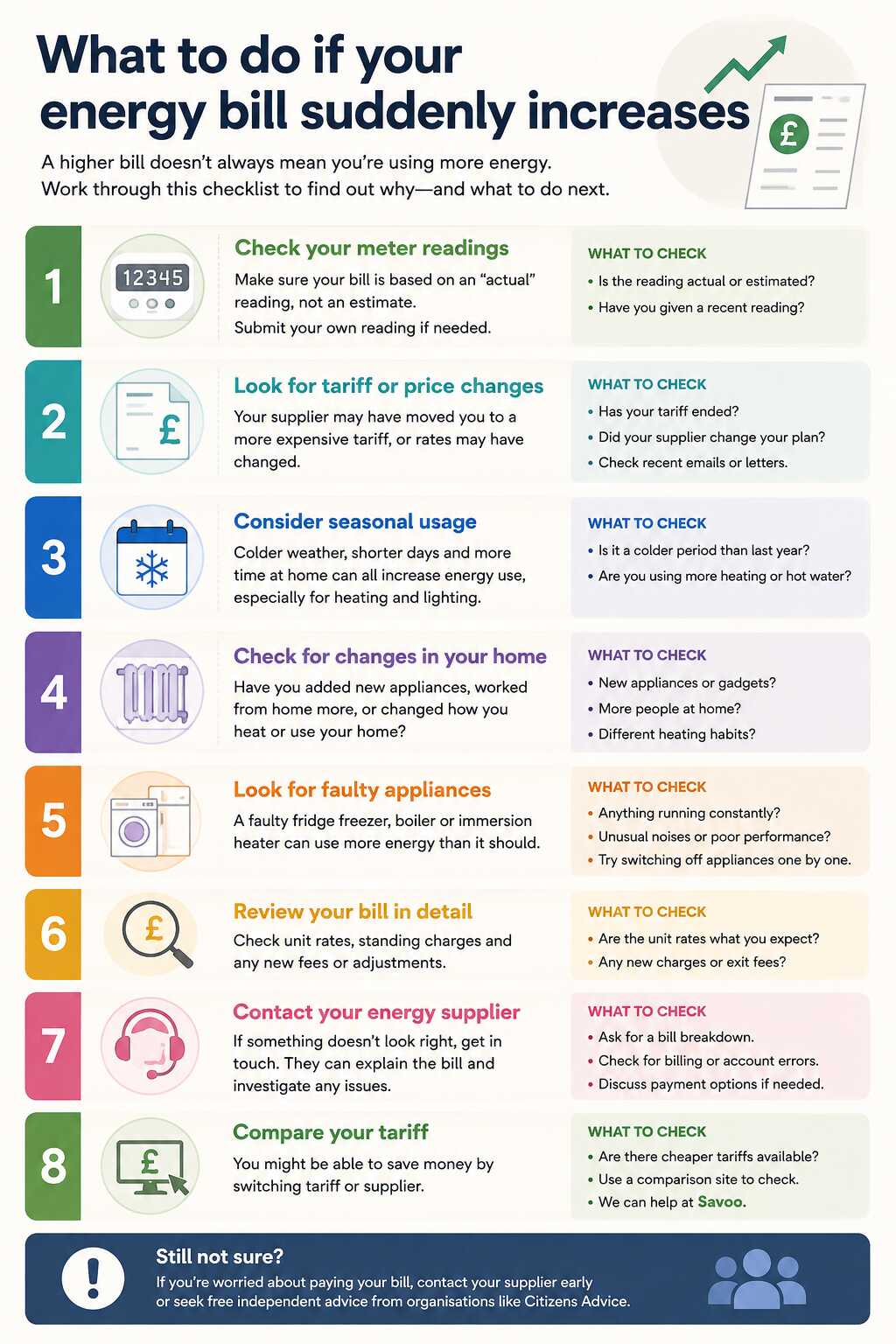
Final thoughts: Small changes, sensible savings
In my experience, the best money-saving habits are the ones you hardly notice after a while. If saving energy means you have to follow a complicated routine every morning or end up arguing with your partner, it probably won’t last.
Start with changes that make sense for your own home and build from there. I’m not going to try every energy-saving tip just to save a little bit more. I want our home to stay comfortable, and I want the savings to be worth it.
Keep an eye on what you use, check your bills, and make smart changes when it feels right. We all have to pay for energy, but there’s no reason to spend more than necessary.
Frequently Asked Questions
Who is the UK’s cheapest energy supplier?
Octopus Energy and Outfox the Market are often amongst the lowest-priced energy companies in the UK, especially when it comes to competitive fixed and tracker tariffs. Yet no single provider is the cheapest for all customers, since the best offer varies over time and depends on your postcode, level of energy usage, the way you pay and the type of meter you have.
Rather than just looking at the advertised price, compare tariffs using your own yearly gas and electricity use. This will give you a clearer idea of which supplier is cheapest for your home.
Can the over 60s get help with energy bills?
Yes, in the UK individuals who are over the age of 60 might be able to obtain assistance with their energy bills. The kind of help you receive will depend on your age, income and benefits and can consist of the Winter Fuel Payment, the £150 Warm Home Discount and energy-efficiency grants.
The Winter Fuel Payment for the 2026/27 winter season will be given to eligible individuals who were born on or before 27 June 1960, the amount usually being between £100 and £300 for each household. Although there may be further assistance to obtain from your energy supplier or your local council, it is advisable to check whether you are eligible rather than simply assuming that your age is sufficient for you to qualify.
Is it cheaper to leave the heating on all day?
It’s a common energy-saving myth that leaving your heating on is cheaper than turning it on and off as needed. Keeping your home continuously warm means replacing heat as it escapes, including during periods when nobody benefits from it. Using your heating controls to schedule warmth around when you're at home can therefore reduce unnecessary energy use.
There are exceptions. Heat pumps are designed to operate differently from gas boilers and can work more efficiently at lower temperatures for longer periods, while underfloor heating can take considerably longer to warm up and cool down.
You May Also Like

How to Save Money Quickly
by Ed Fleming | 17/6/2025
8 Tips to Help You Save Money as a Teenager
by Ed Fleming | 24/4/2025